Get in touch with Wanhui Company

[ SYS-01 ]
Specifications / Process / Resources
Disposable Food Containers, Source-Factory Manufacturer of Meal Boxes, Bowls, Trays & Takeout Packaging
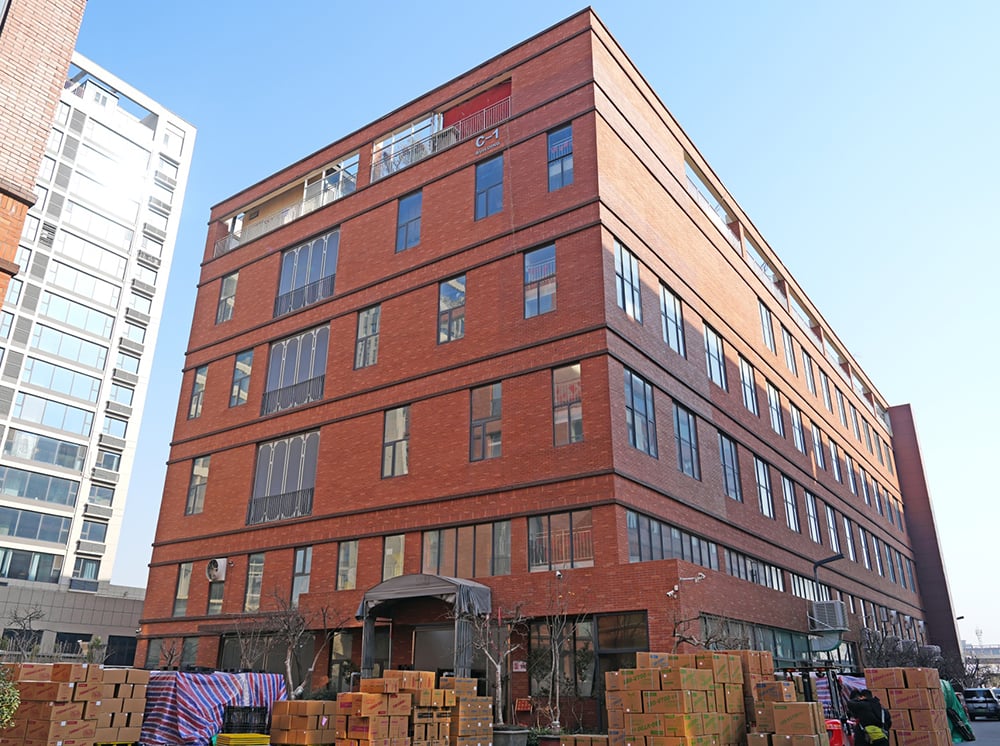
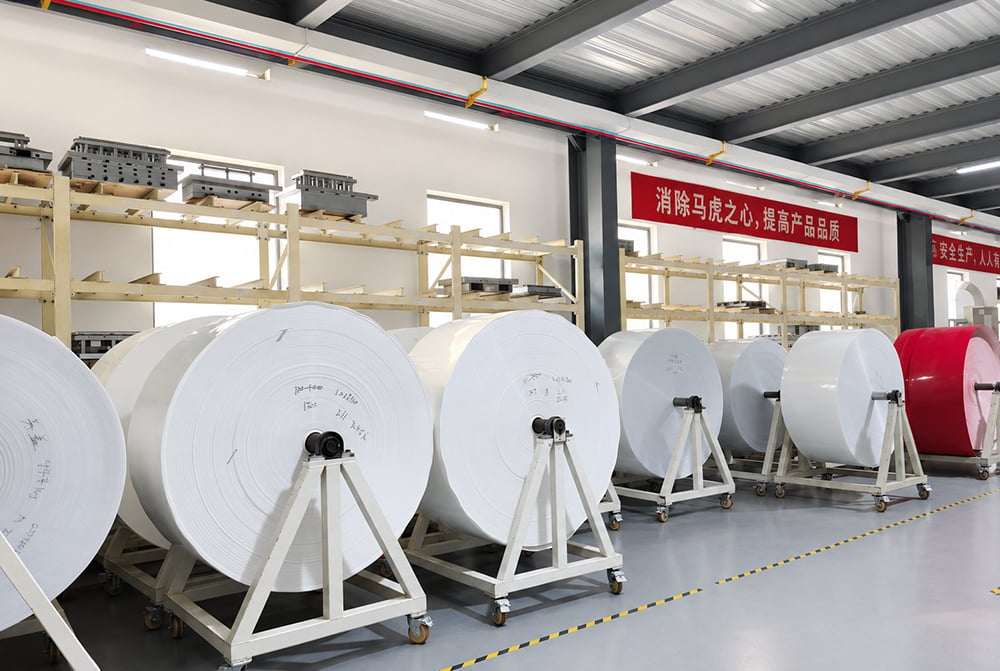
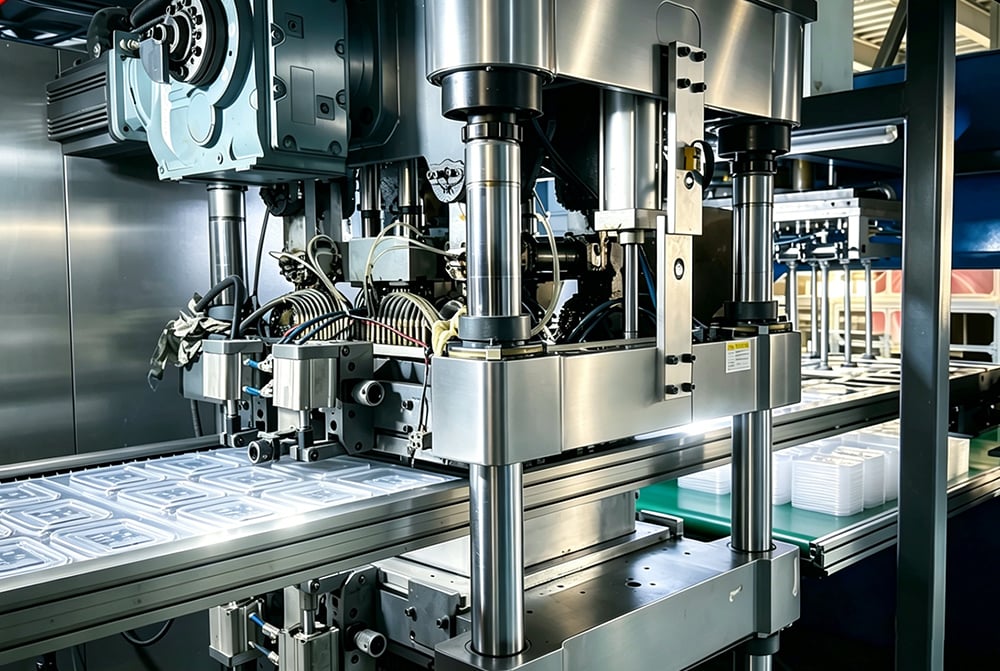
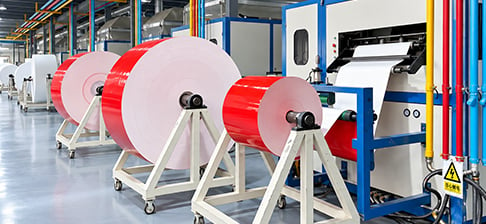
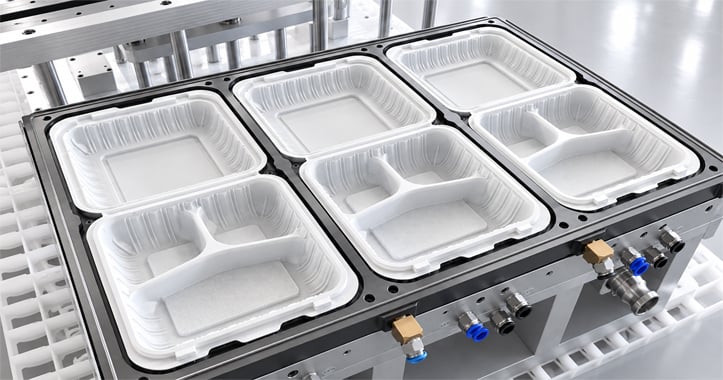
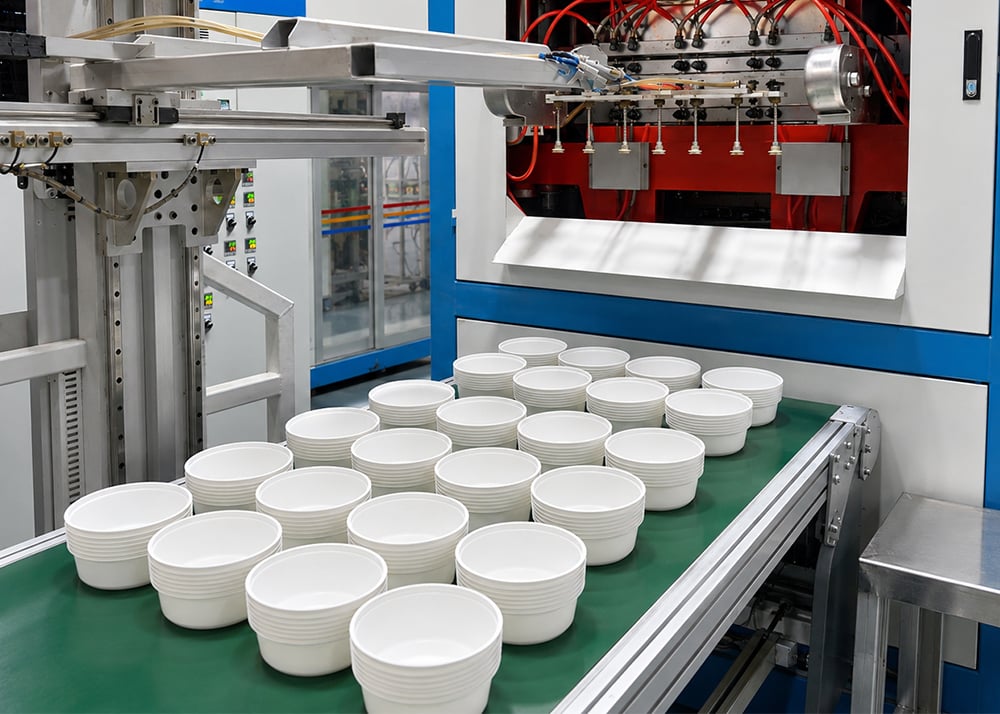
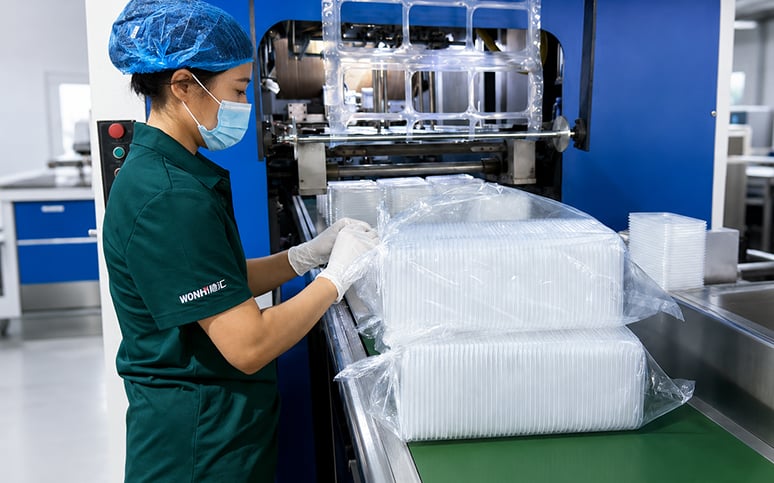
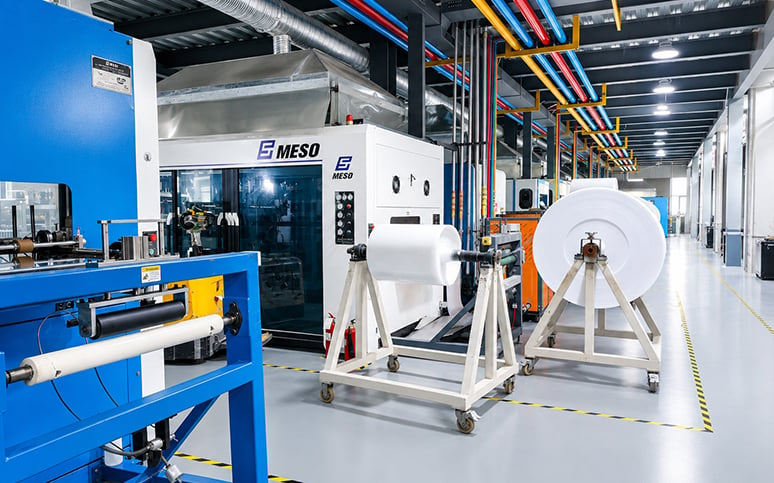
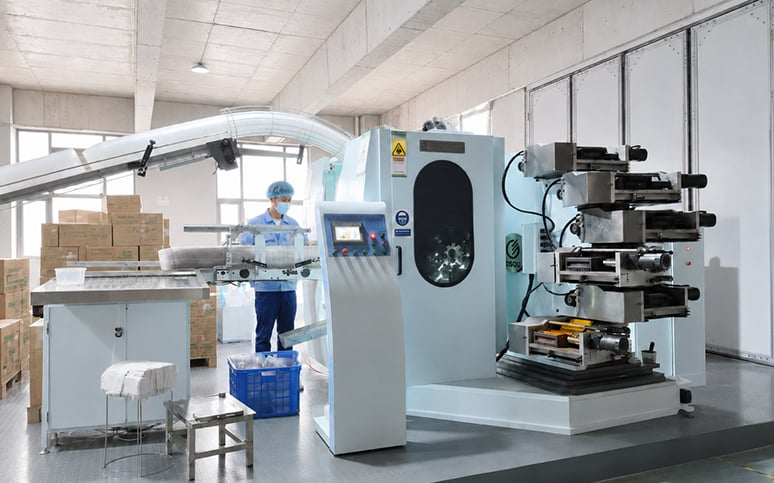
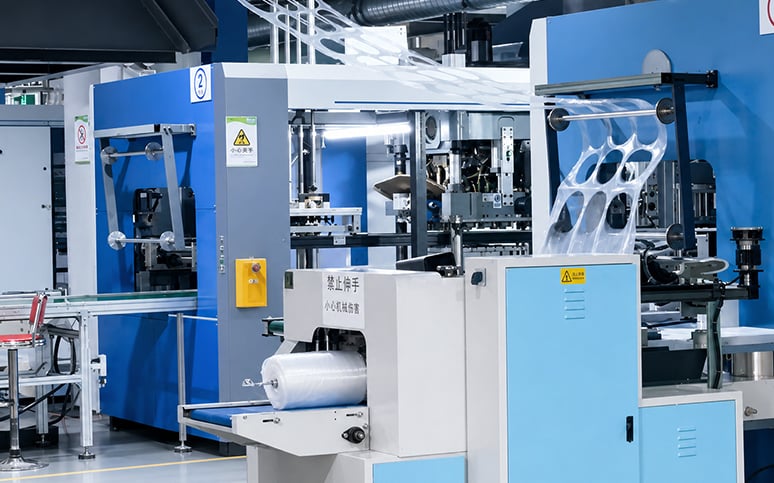
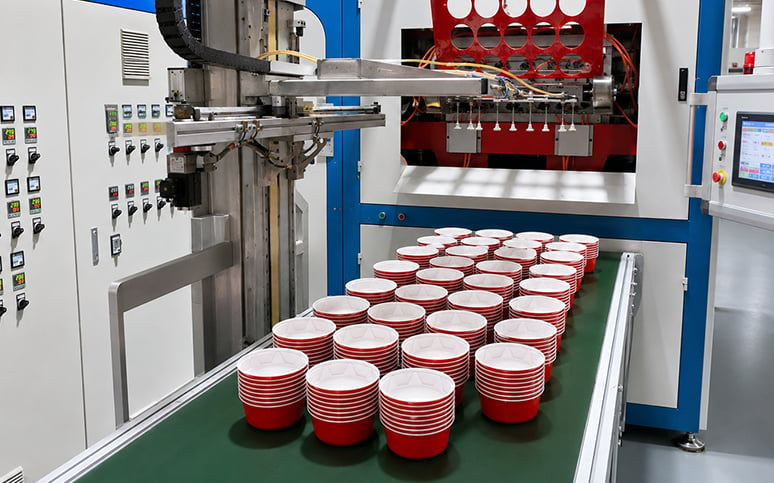
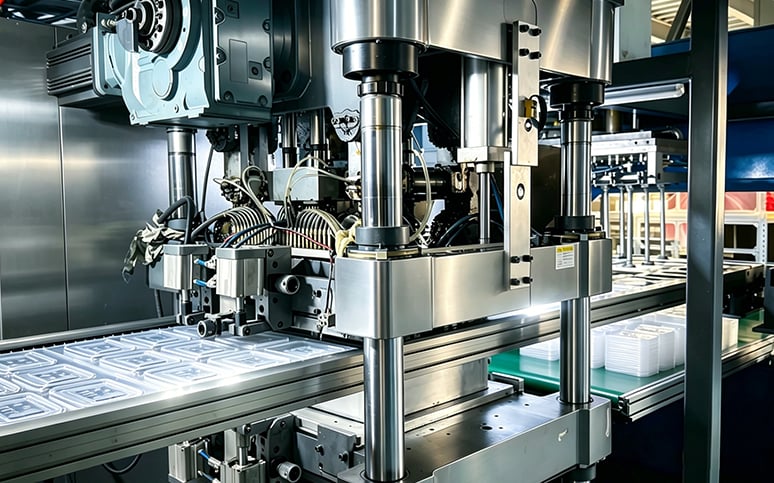
Since our facility was set up, the team here has been pressing, extruding, and injection molding every thing from individual meal boxes, lunch bowls and food trays to clamshell hinged lunch containers with a snapped-closed seal on our own facilities (and never on traded, re-packaged units as often happens in the market!). In total, we maintain twenty thermo-forming lines and six sheet extrusion lines along with sixty injection molding machines, to run over thirty metric tonnes of sheet each day, producing and delivering over a million units per day.
Production Specifications
20 yrs
Source factory, not reseller
1M+/day
Units, 6 material families
Ø120–250mm
280–3,500 ml range
FDA 21 CFR
177.1520 food-grade resins
EPS-ban
compliant in all 12 states
Logo + IML
Custom mold & in-mold label
That matters to you because a takeout container is a single-use part with a job: hold hot food through a 30–60 minute delivery without warping, leaking, or going soggy, then survive a microwave or a freezer. Get the material wrong and you pay for it in refunds. We build the right material for the job and document why.
Integrated Manufacturing, Stable Supply
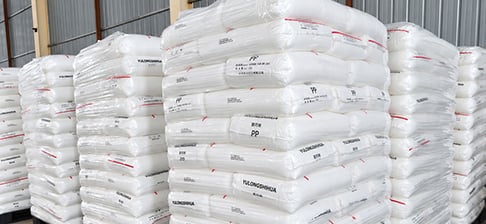
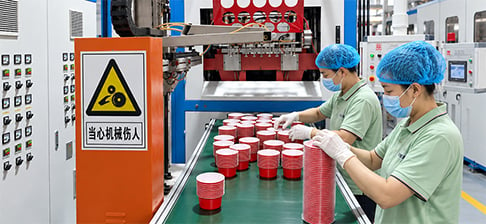
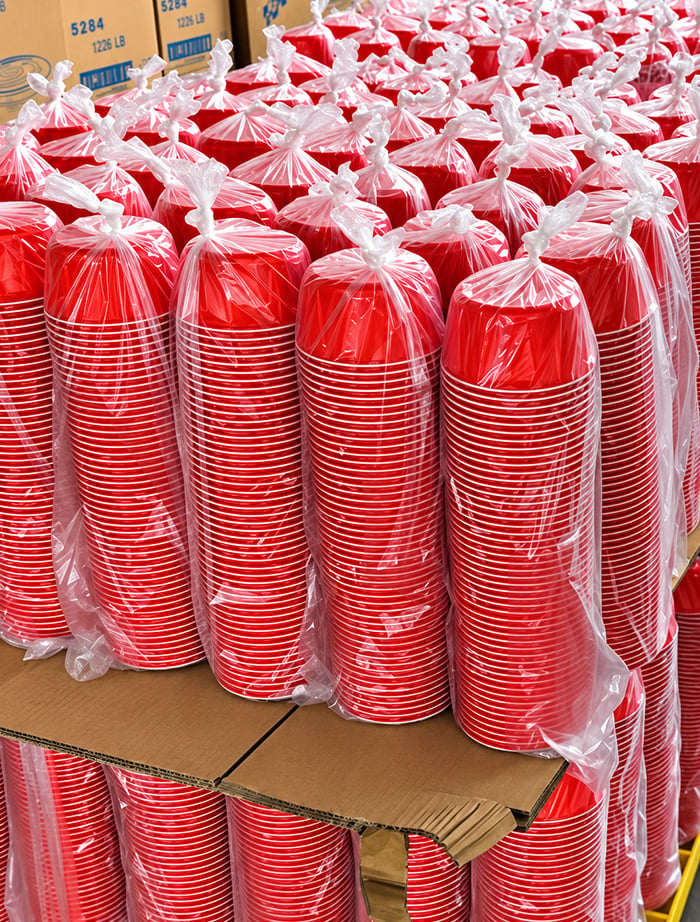
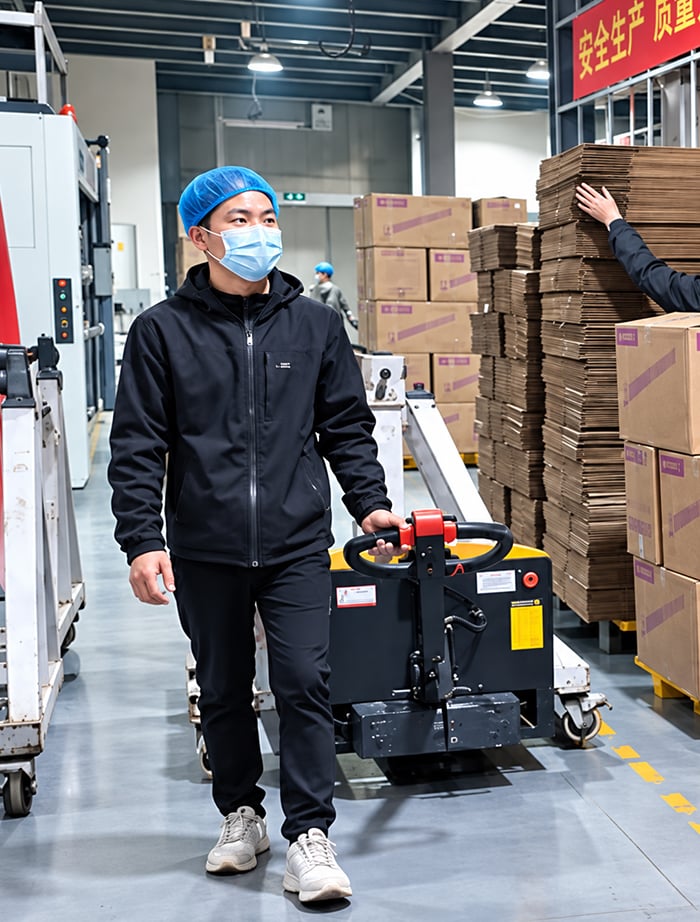
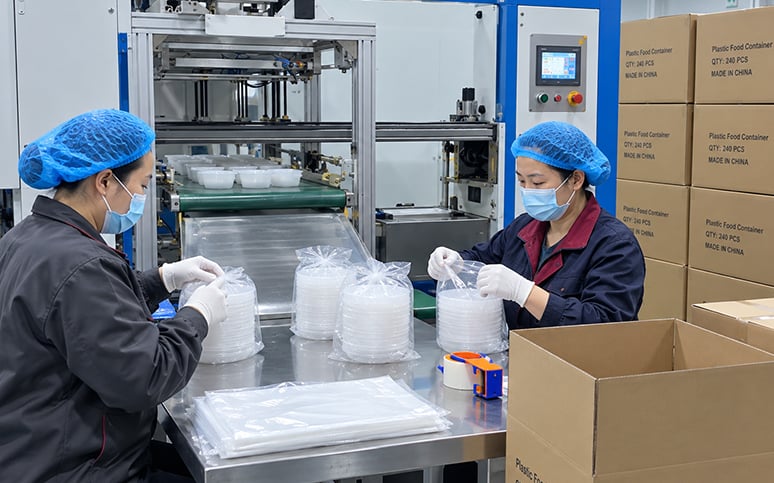
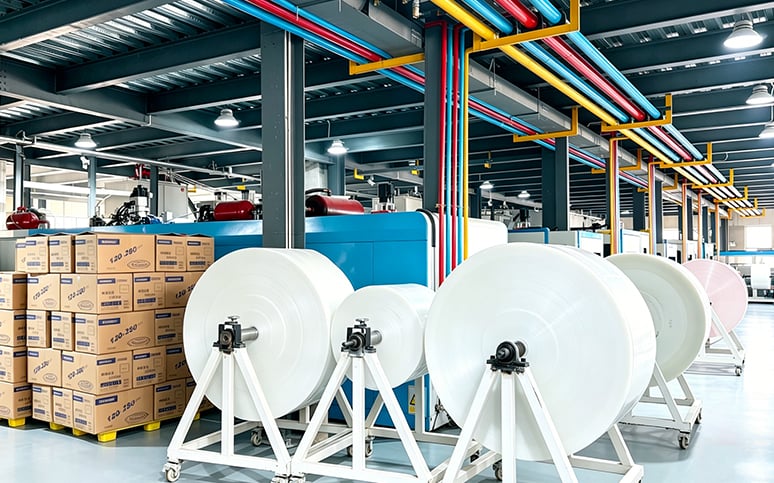
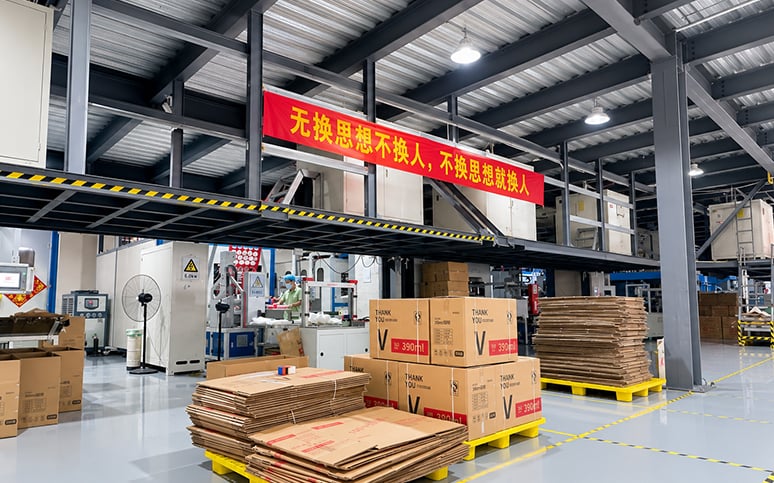
Our factory covers the entire production chain from raw material extrusion to packing and shipment.
With in-house manufacturing and strict quality control, we ensure stable capacity and reliable bulk supply for global customers.
10+
Years Export Experience
7,000 m²
Production Facility
10+
Production Lines
5,000 m²
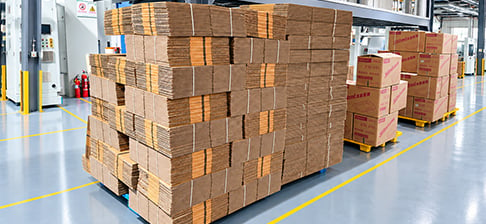
Warehouse
100,000+
Cartons in Stock
3,000+
Daily Shipments
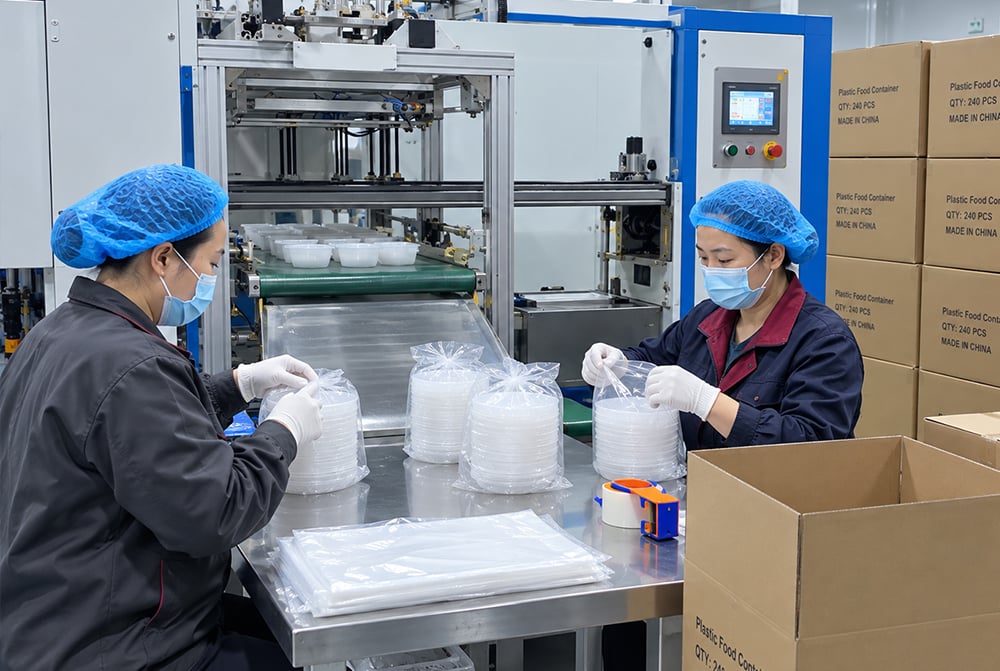
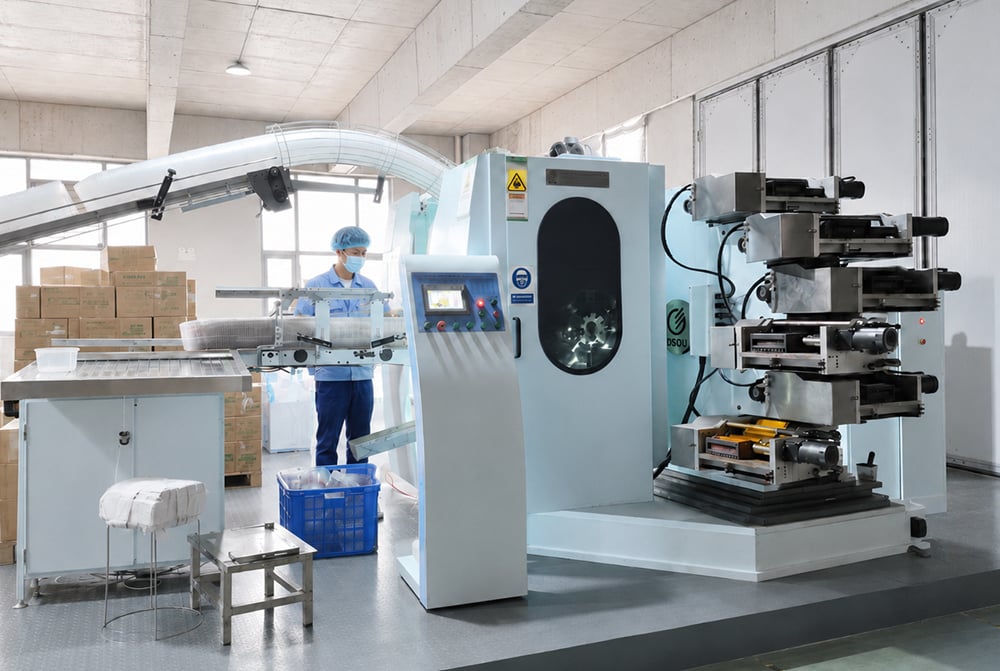
Strict Quality Control at Every Stage
From incoming raw materials to final shipment, our inspection process helps ensure product consistency, packaging accuracy and reliable delivery for global customers.
OEM & ODM Capabilities
We support custom mold development, structural design, private-label packaging, and retail pack customization for food packaging buyers. From concept to mass production, we turn your ideas into market-ready products.
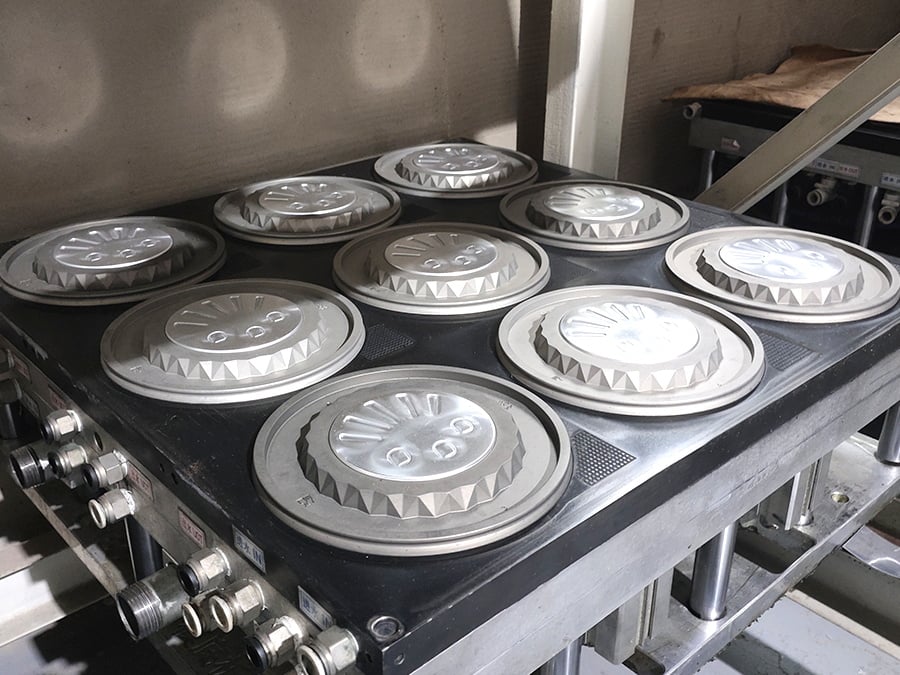
Custom Mold Development
In-house mold design and manufacturing to ensure precision, consistency and faster turnaround.
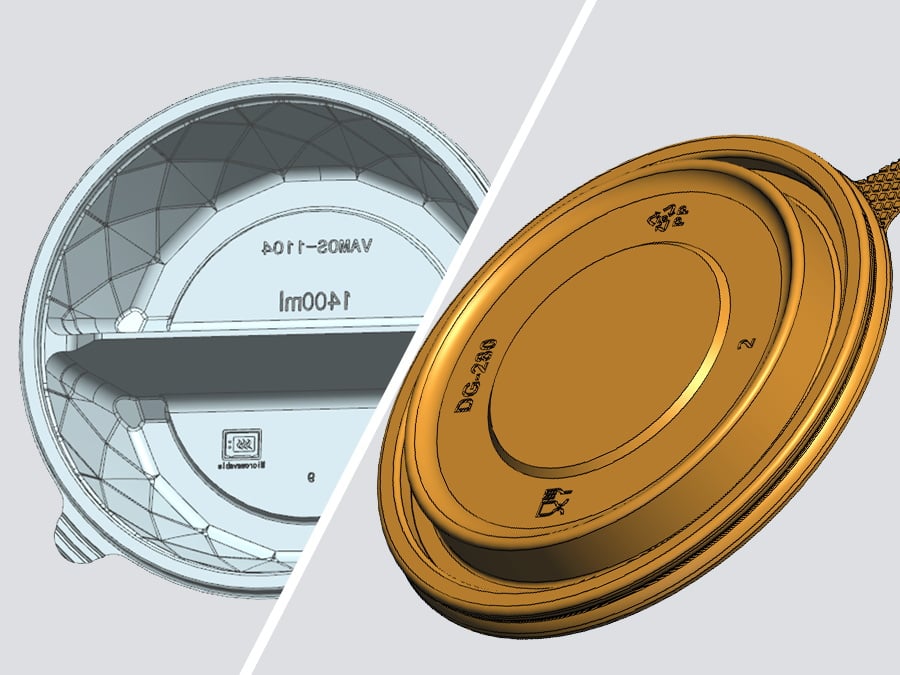
3D Design & Structure Optimization
Professional 3D design and engineering support to optimize product structure, material and functionality.
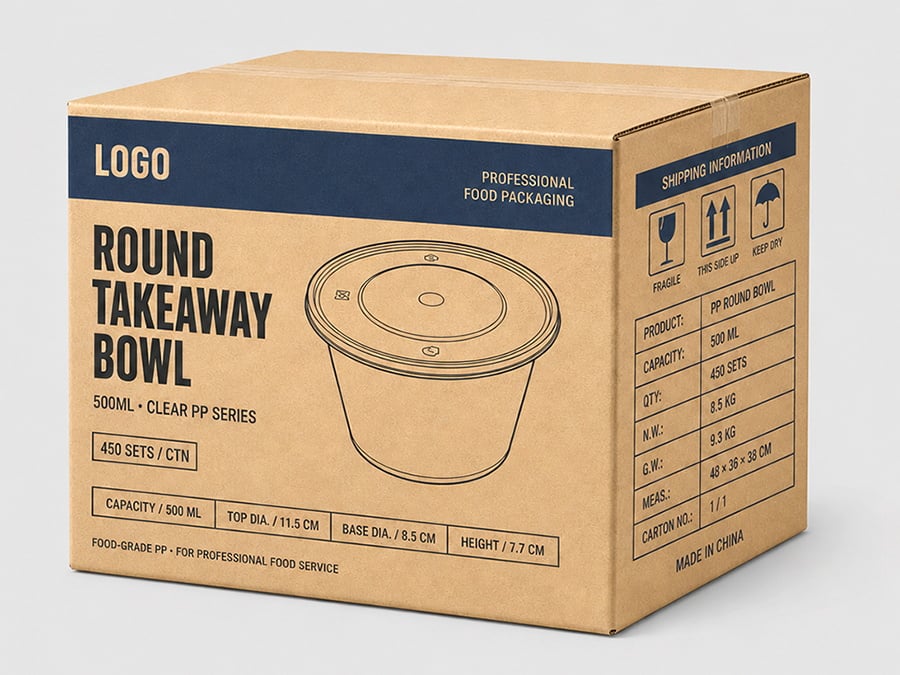
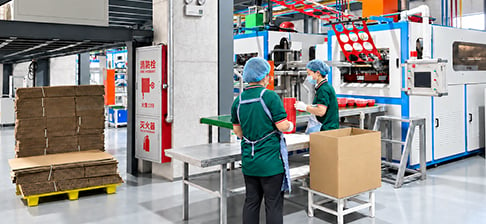
Custom Carton Printing
Support customized carton size, printing, logos and handling marks to meet your brand and export requirements.
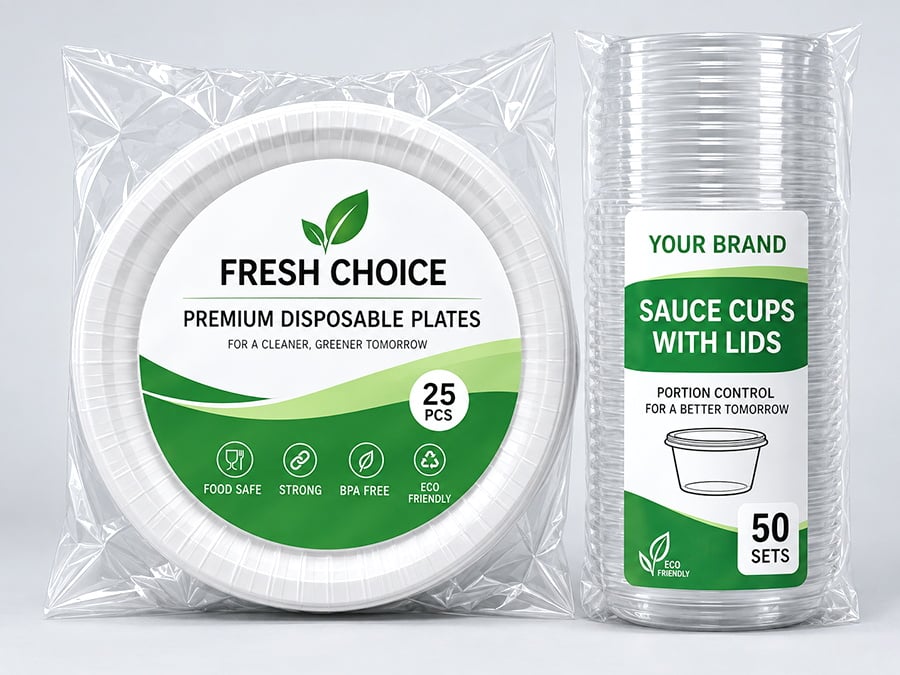
Retail Pack & Private Label
Customized retail packaging, bags, labels and private-label solutions to help your products stand out in the market.
-
1
Design
Share your idea or requirements
-
2
Mold
Mold development & testing
-
3
Sample
Sample confirmation
-
4
Mass Production
Stable production & on-time delivery
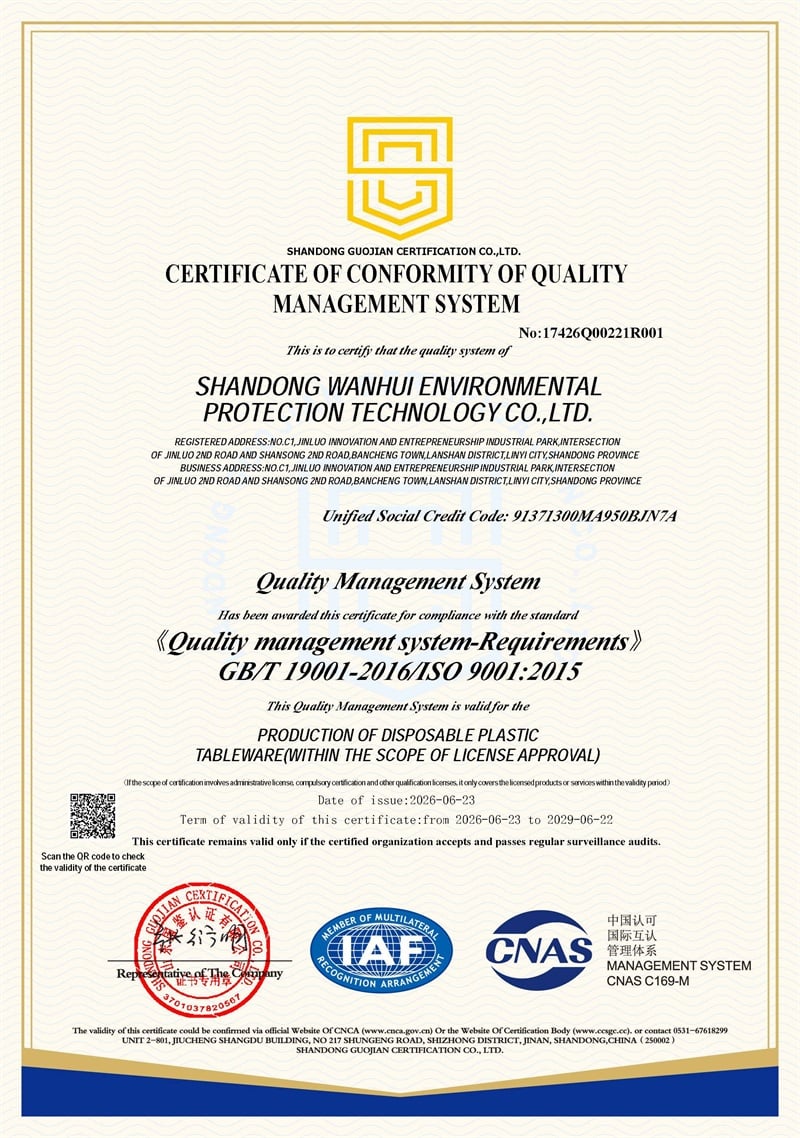
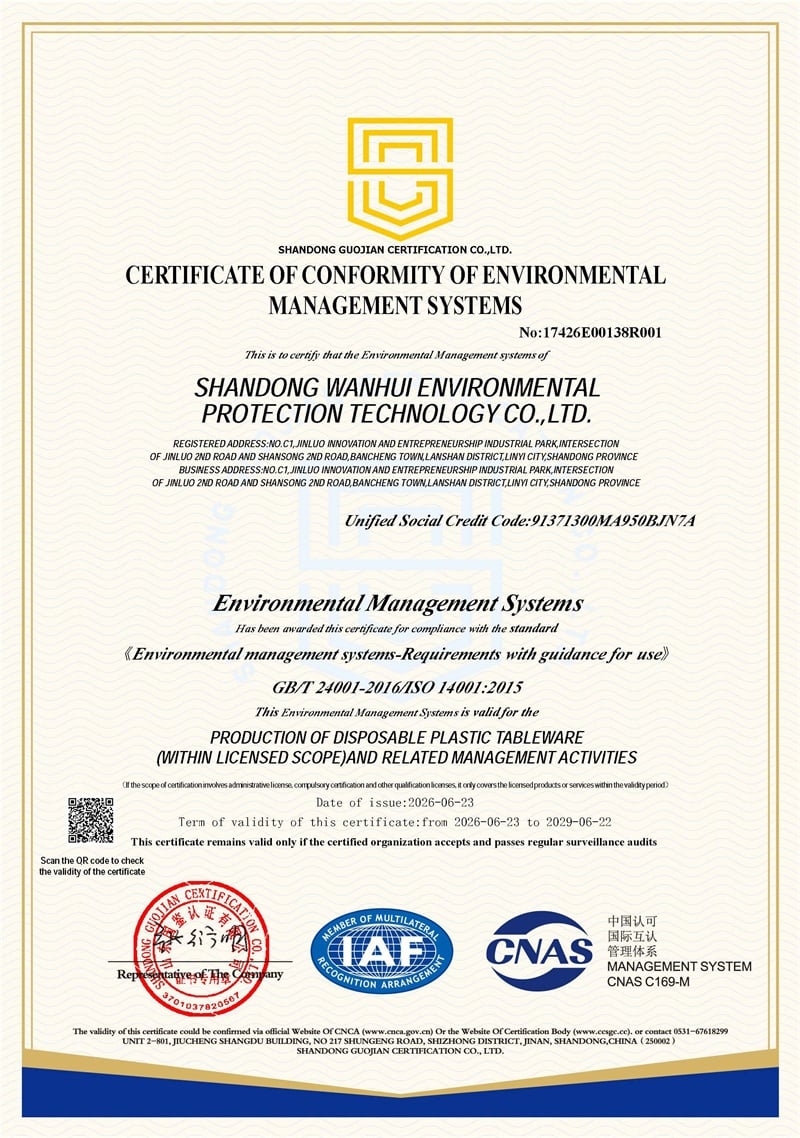
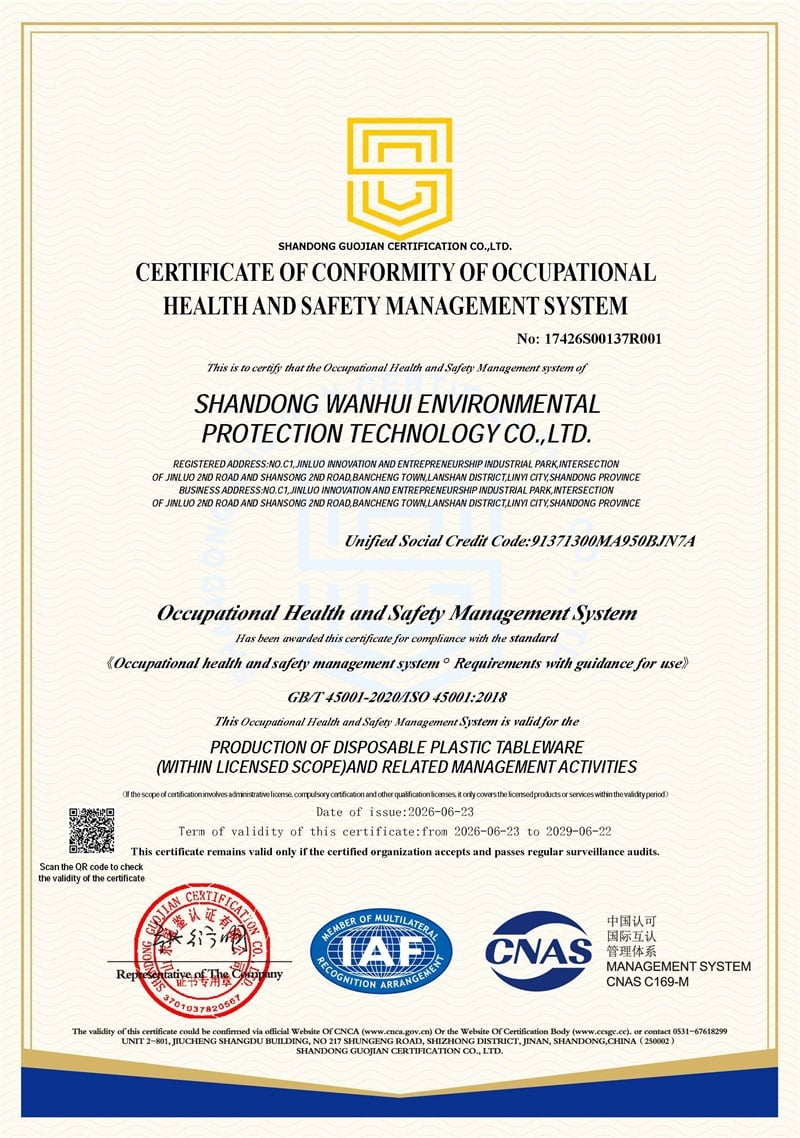
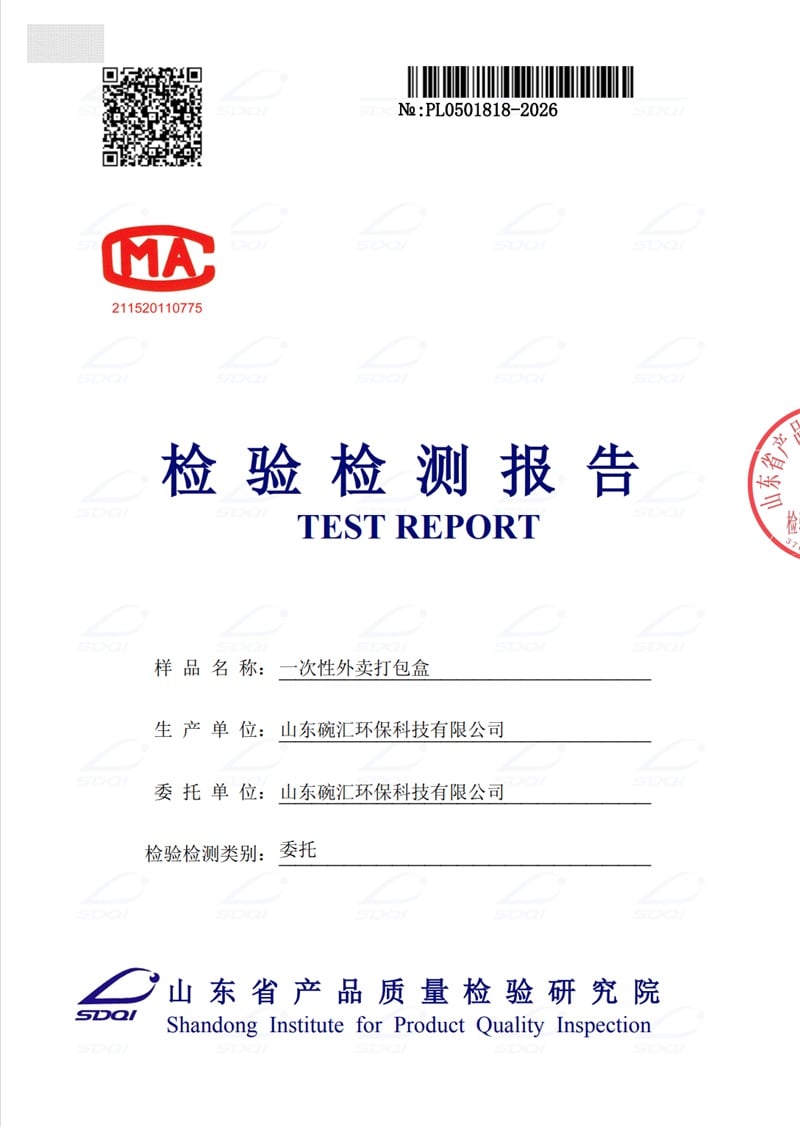
Certified Quality,
Compliant Supply
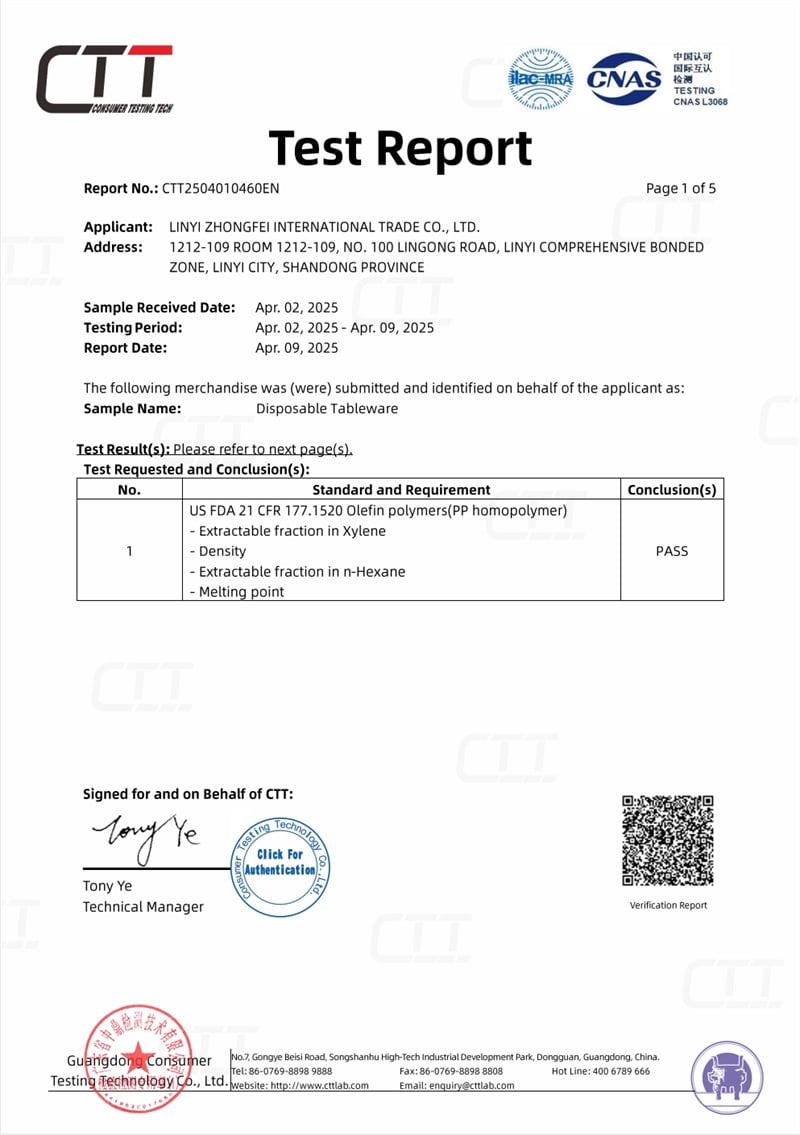
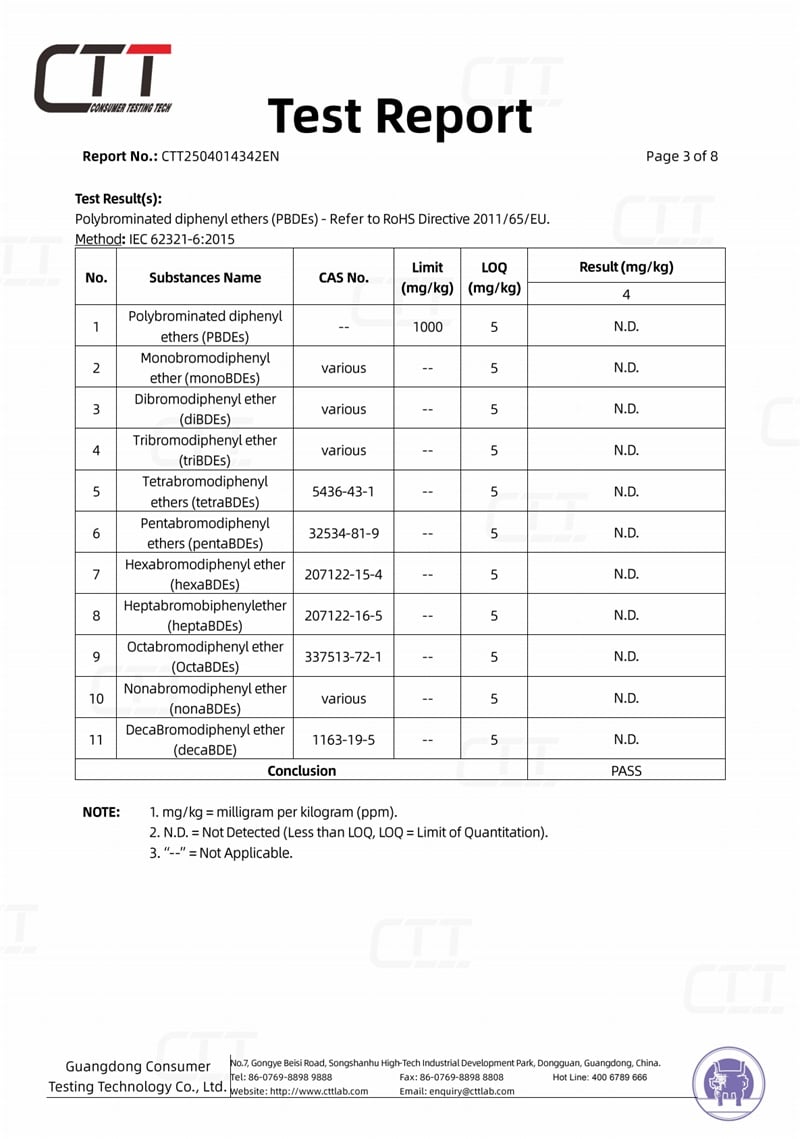
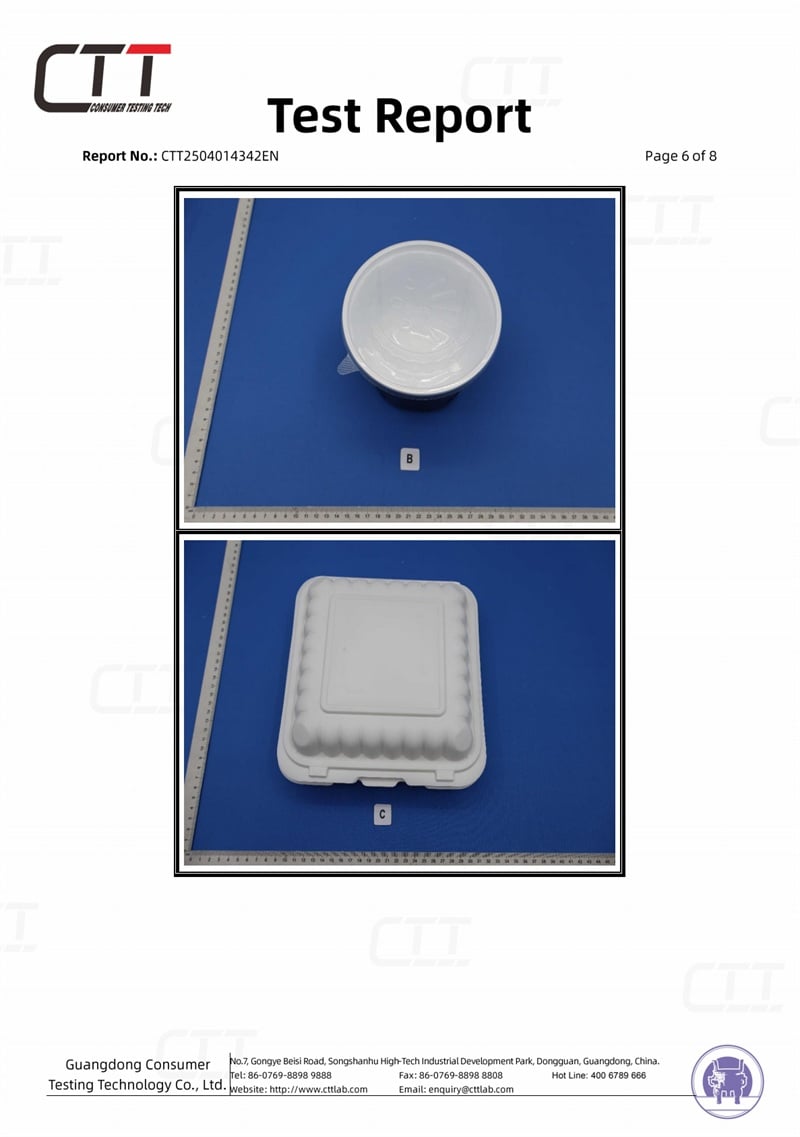
Our manufacturing and products are supported by internationally recognized quality-management certifications, inspection reports, production licensing, trademark registration, and design patents, ensuring safe, reliable and compliant food packaging solutions for global customers.
View Certifications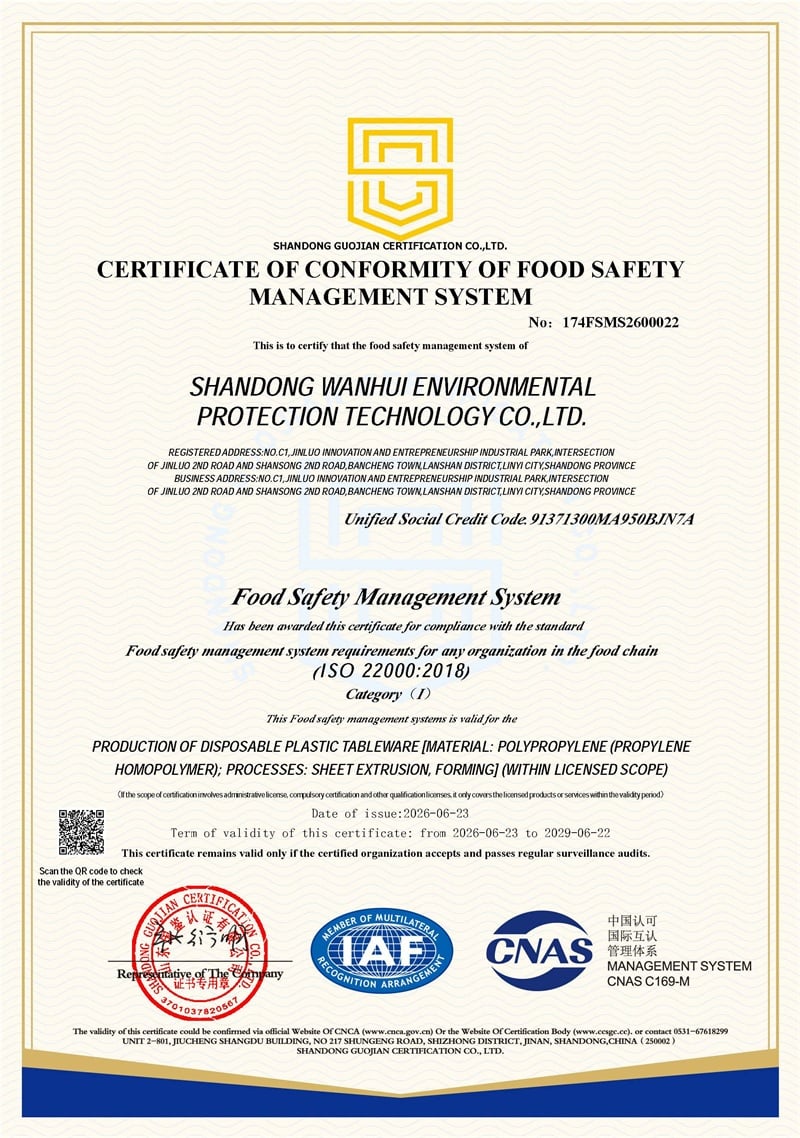
Warehousing & Shipment
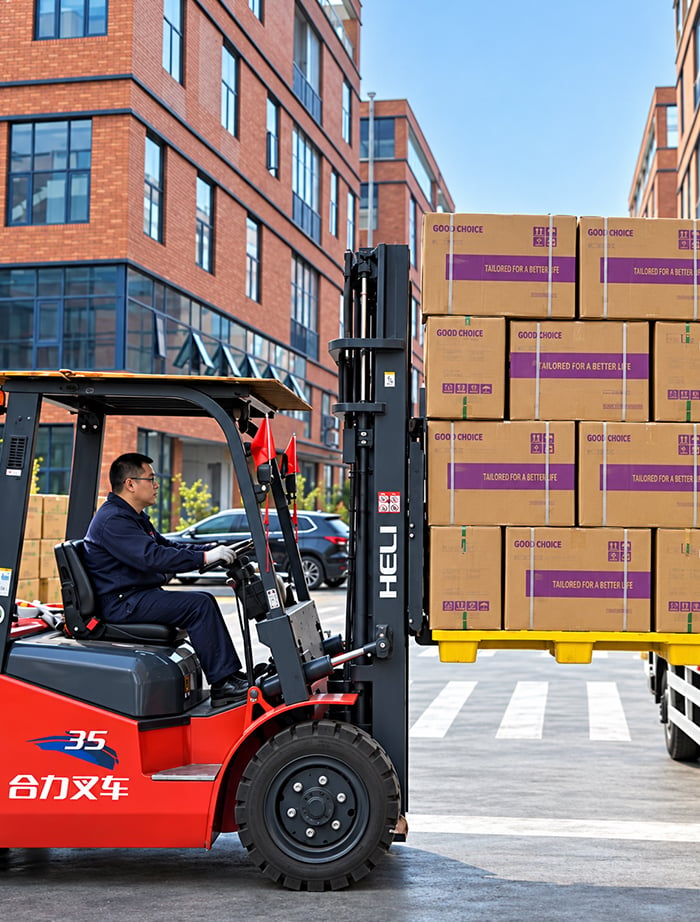
Organized inventory, fast loading, and efficient export delivery.
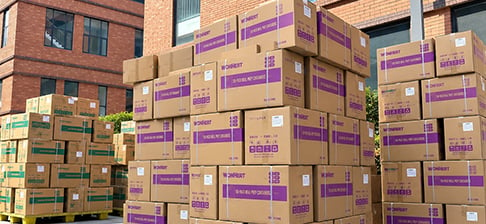
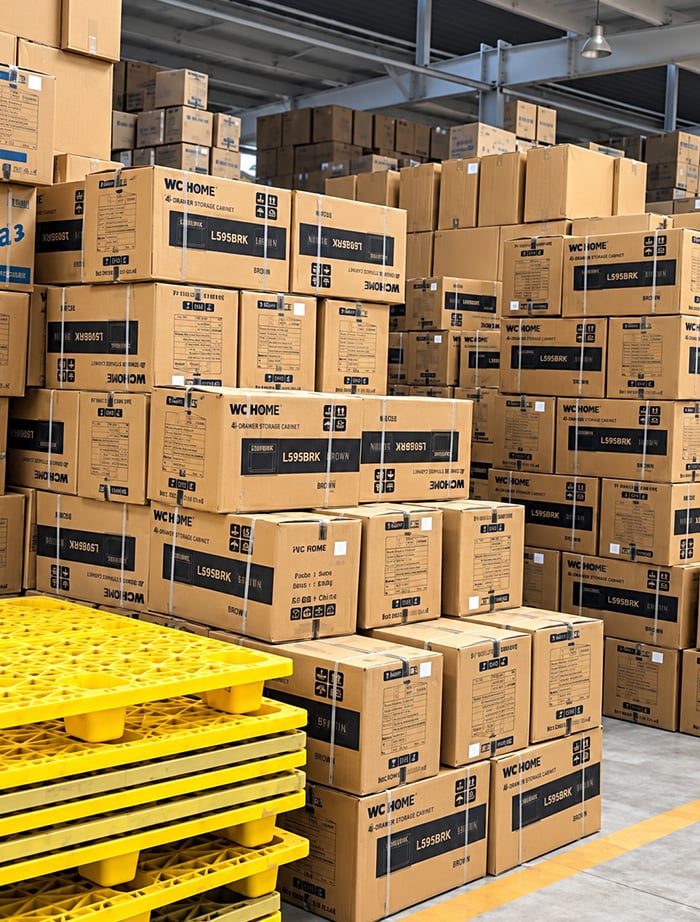
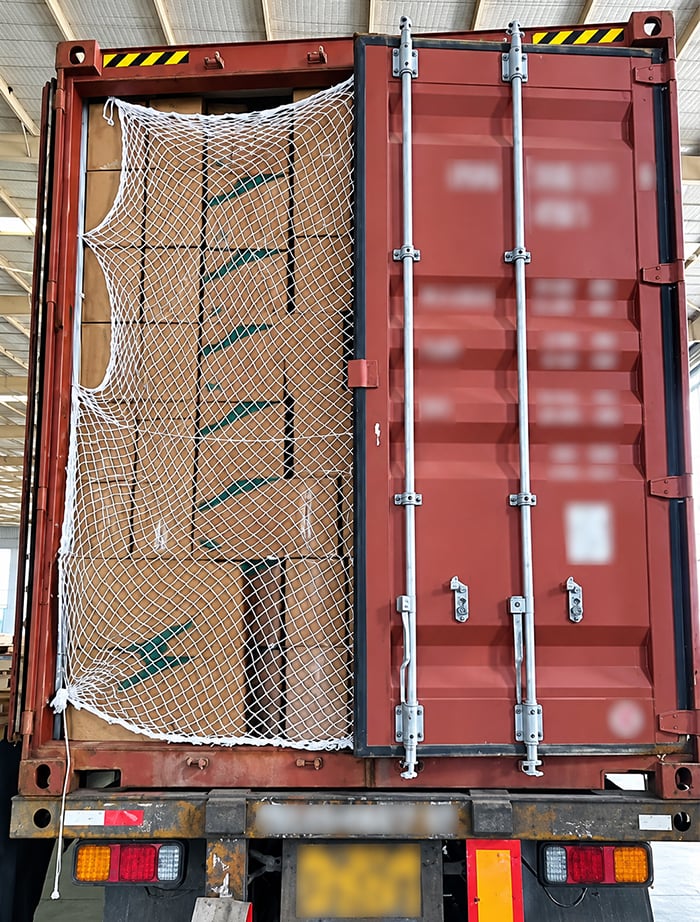
We maintain a large inventory of food packaging products and operate a streamlined shipment process from warehouse to container. With stable supply, professional handling, and efficient loading, we help global customers receive their orders on time.
5,000 m²
Warehouse
100,000+
Ready Stock
3,000+
Cartons / Day
Fast
Container Loading
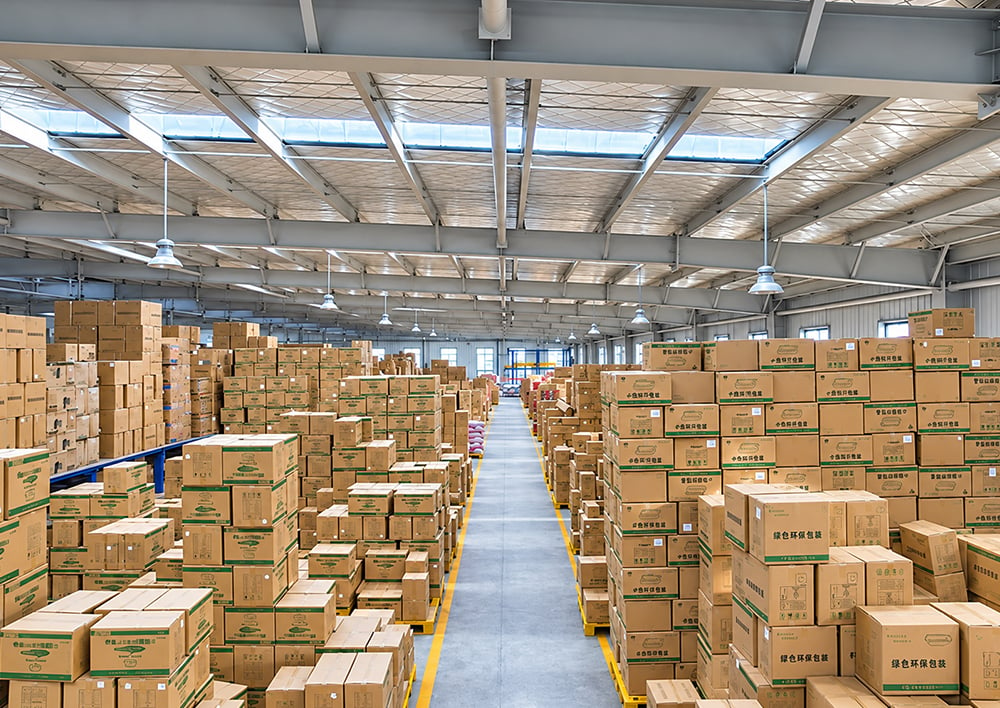
Large Inventory, Well Organized
The Wanhui Range: 6 Material Families of Meal Boxes, Bowls, Trays & Clamshells, and How to Choose
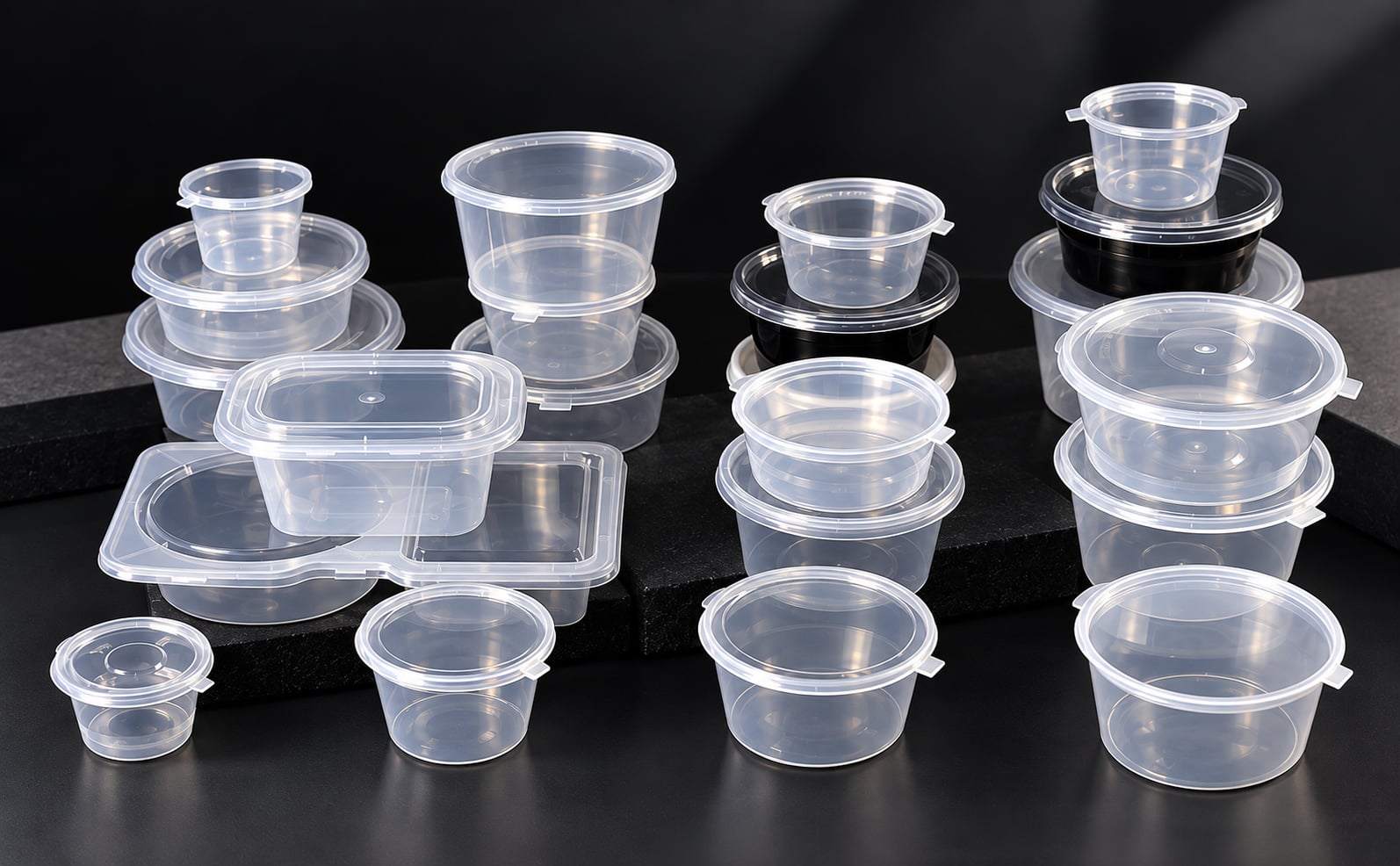
Most distributors sell you a catalog and let you guess; we build across six material families and tell you which one fits your menu, your delivery window and your local codes. Across those families we mold round and square plastic bowls, rectangular boxes, compartment trays, soup vessels, salad bowls, bento boxes, sauce and condiment cups, and to-go boxes – stackable, leak proof and grease-proof, with lids and containers tooled as a matched pair. The cards below link to each product line, and the Fit-Finder below results in a use case that wins it for the family.
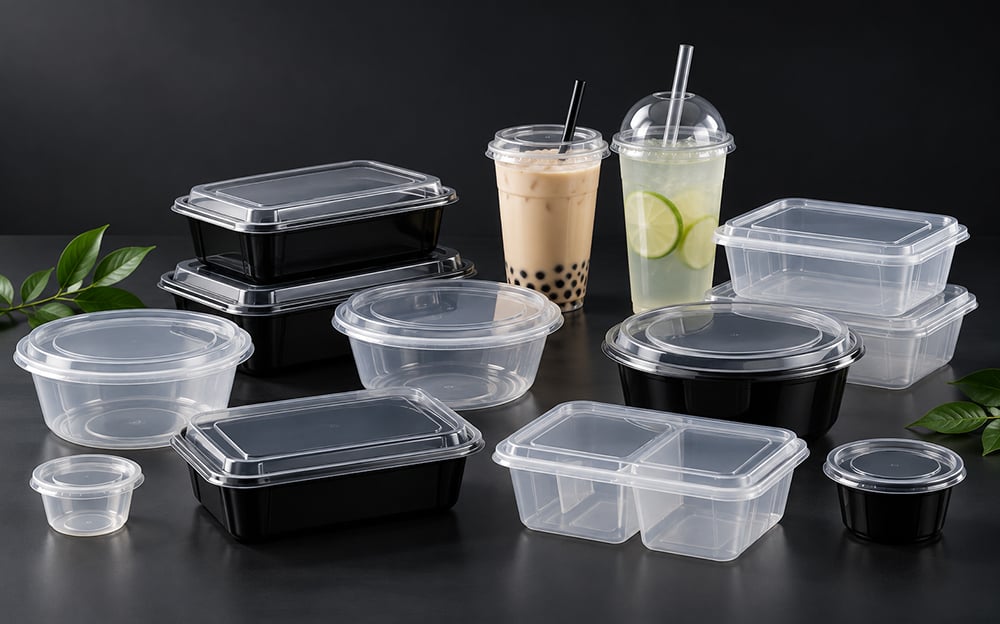
Injection-molded PP / PET
Disposable Plastic Containers
Clear, white, and black round bowls, rectangular boxes, square containers, and compartment trays from 300–3,500 ml. The workhorse for take-out, deli containers, and salad packs, disposable plastic food containers and cups with lids for hot or cold food storage.
View plastic food containers →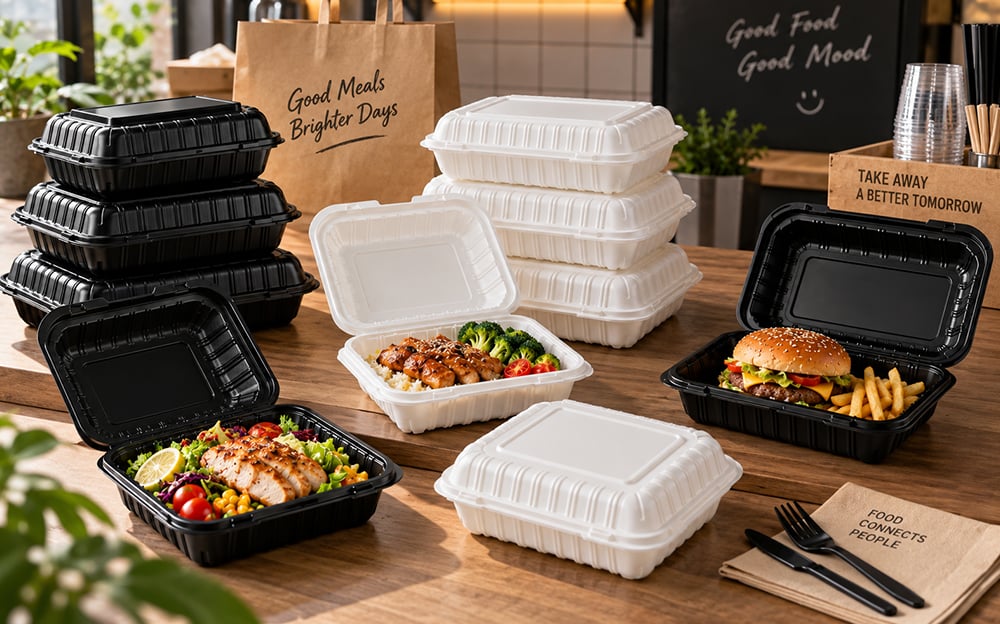
Mineral-filled PP
MFPP Hinged Lid Containers
One-piece tamper-evident hinged clamshells in mineral-filled polypropylene, stiffer, microwave-safe, the mid-to-premium hot-food box.
View MFPP hinged lid containers →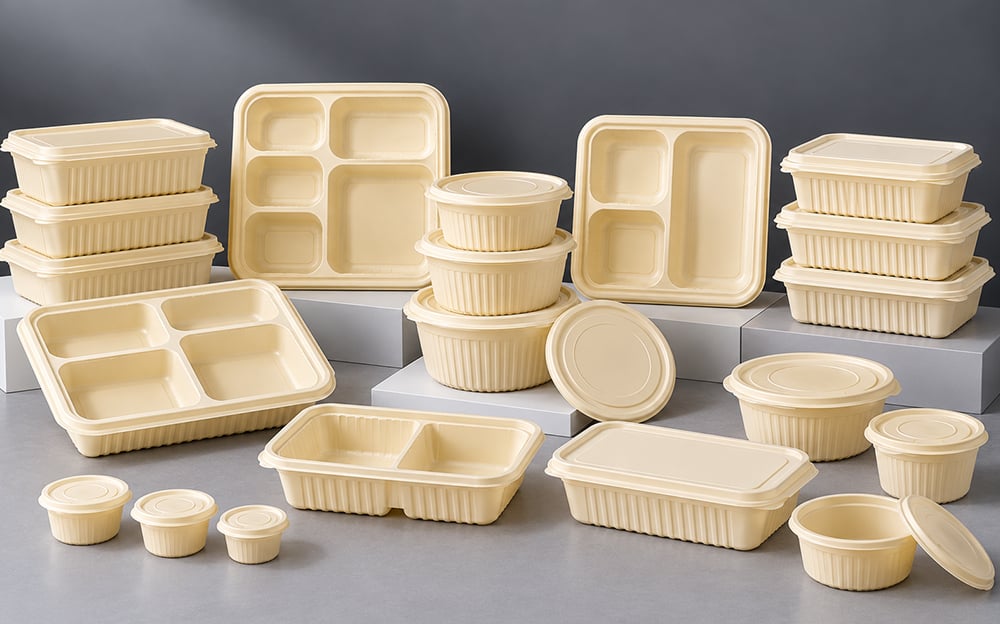
Bagasse & cornstarch
Eco-Friendly Food Packaging
Compostable, biodegradable bowls and clamshells from sugarcane bagasse molded fiber and cornstarch, for markets that mandate it.
View Eco-Friendly food packaging →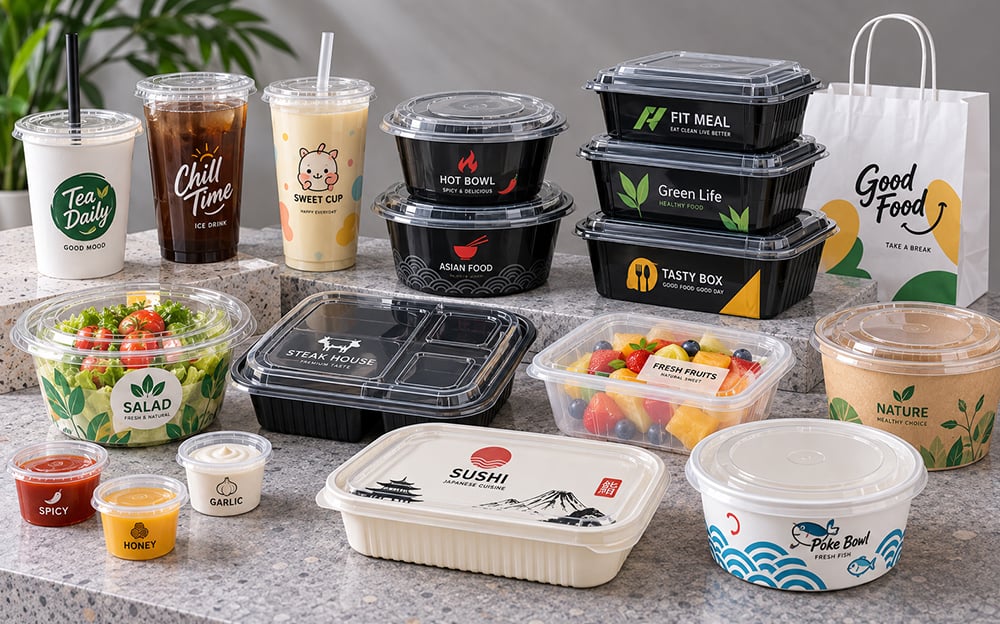
Logo print + IML
Custom Food Packaging
Your brand pressed into the container itself with in-mold labeling, plus custom mold development for exclusive shapes.
View custom OEM & in-mold-label food packaging →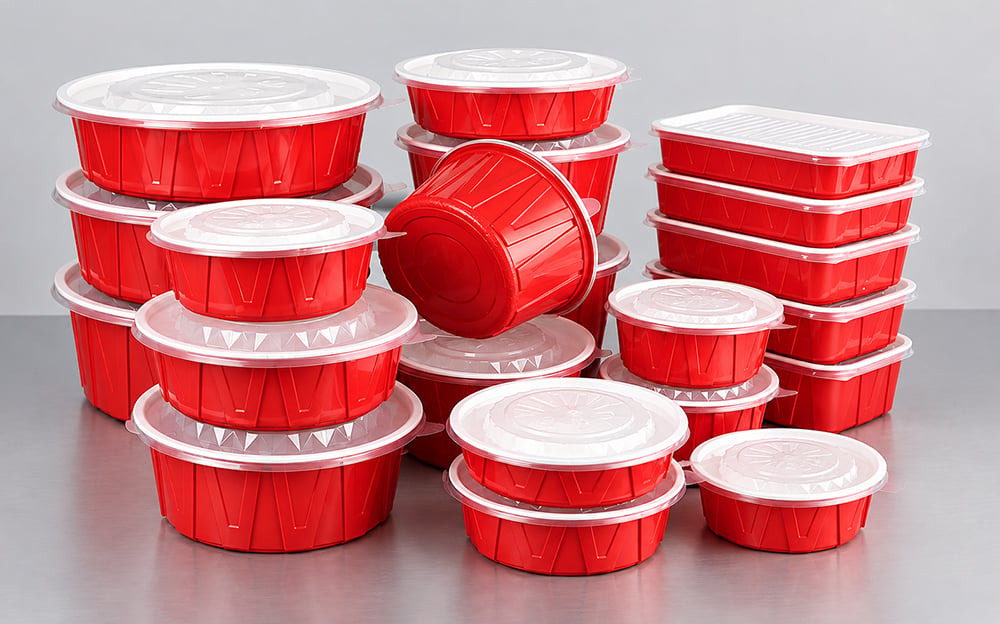
Bulk / direct
Wholesale Food Containers
Factory-direct case and pallet volumes that skip the distributor markup, with transparent MOQ tiers.
View wholesale & bulk food containers →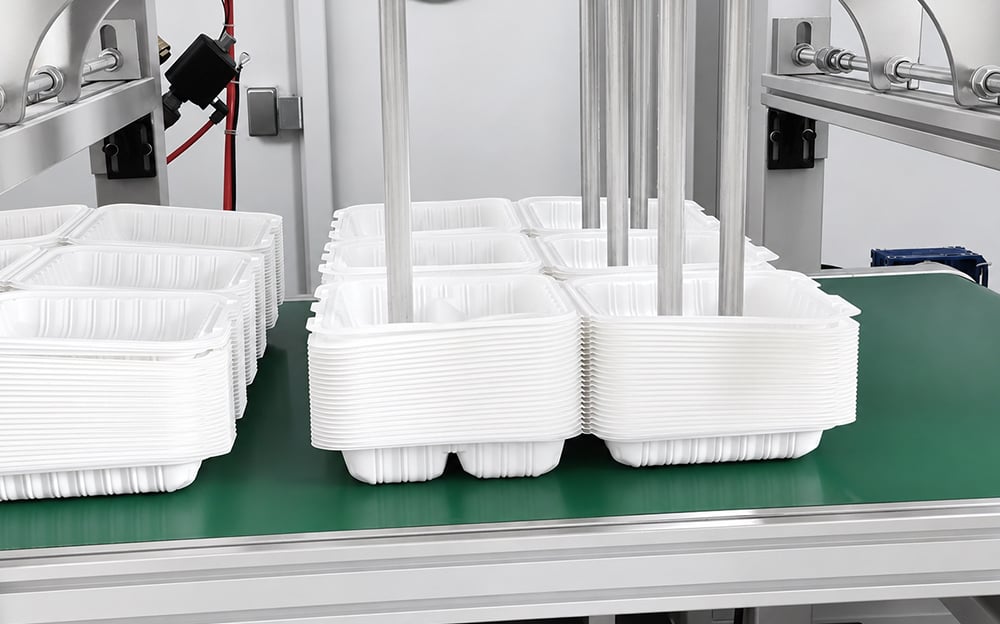
Capability
Food Container Manufacturing
The lines behind the catalog, thermoforming, sheet extrusion, and injection molding under one roof, with our own mold shop.
View food container manufacturing →The Foodservice Container Fit-Finder
| If your priority is… | Typical food | Choose this family | Why |
|---|---|---|---|
| Cold grab-and-go clarity | Salads, fruit, cold deli, sauce cups | Clear PET / PP | Crystal clarity sells the food; cold service stays under PET’s heat limit |
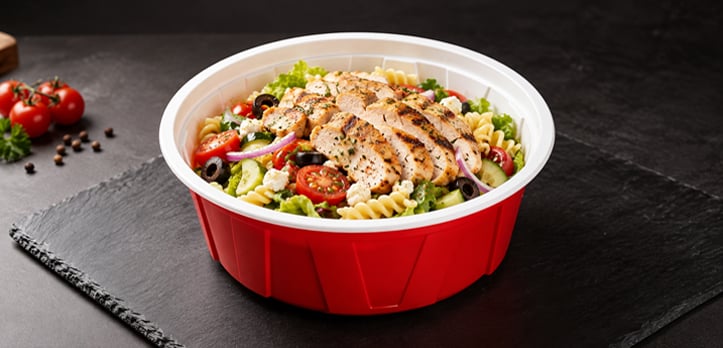
| Hot delivery + microwave reheat | Rice bowls, curries, pasta, queso | Black PP / MFPP | Holds heat, microwave-safe, hides grease, perimeter-lock lids |
| Premium retail presentation | Branded ready-meals, chilled retail | Thermoformed high-end PP + IML | Thick, rigid, brand printed into the wall |
| Compostable mandate | Festival, campus, municipal contracts | Bagasse molded fiber | Meets foam-ban + compost rules; microwave & freezer safe |
| Lowest landed cost at volume | High-throughput QSR staples | Injection PP, factory-direct | Best cost-per-use once distributor markup is removed |
Most operators lose a week of trial-and-error and a few cases of the wrong box before they land on the right one. Because we operate all six families in-house – 20 thermoforming, 6 extrusion and 60 injection-molding lines under one roof – we give you a black PP bowl, an MFPP clamshell and a bagasse tray of the same capacity to test side by side, which a single-material vendor can’t. A taqueria doing 400 delivery orders a day moved its wet entrees into our 180-caliber black PP bowls and its cold sides into clear PET, cut its mixed-leak complaints sharply, and proved that between a catalog and a factory.
Material Science & Specifications
PP vs MFPP vs PET vs Bagasse vs Cornstarch: Performance, Heat & Cost Compared
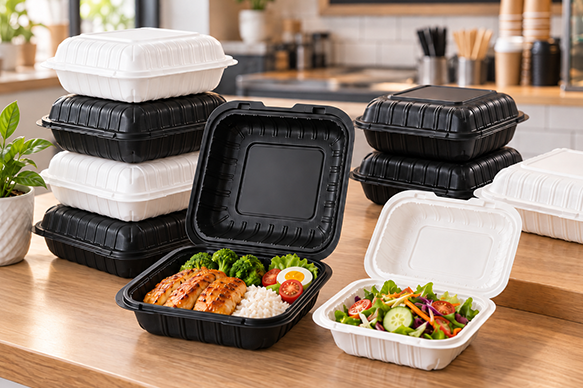
Here’s the fact that re-orders most buyers’ assumptions: among the common plastics, clear PET, the deli cup everyone reaches for, is the first to fail under heat, deforming at about 60°C (140°F) and never microwave-safe, while plant-based bagasse holds to roughly 104°C (220°F) and reheats fine. So “plastic beats fiber on heat” is simply wrong for PET. And “BPA-free” stamped on a polypropylene box is redundant marketing, food-grade PP is polymerized from propylene gas and structurally contains no bisphenol-A, so every compliant PP container is BPA-free by default.
| Material | Max service temp | Microwave | Freezer | Clarity | Relative unit cost |
|---|---|---|---|---|---|
| Polypropylene (PP) | ~120°C / 250°F | Yes (#5) | Yes (to ~-20°C) | Translucent / black | Low |
| Mineral-filled PP (MFPP) | ≥104°C / 220°F, stiffer | Yes | Yes | Opaque (black/white) | Low–Mid |
| PET / RPET | ~70°C / 158°F | No | Yes (brittle <0°C) | Crystal clear | Low–Mid |
| Bagasse (sugarcane fiber) | ~104°C / 220°F | Yes | Yes | Natural fiber | Mid (~2× PP) |
| Cornstarch / PLA | ~60°C / 140°F | No | Yes | Clear/opaque | Mid–High |
Heat figures cross-referenced against the INEOS technical bulletin on the microwavability of polypropylene and published PET/PLA glass-transition data.
The Hot-Fill and Reheat Temperature Ladder
Read it from the bottom up – the higher you fill, the higher up the chain your material must live:
- ~220C+ – CPET dual-oven trays only (a distinct heat-set material, not standard PET).
- ~104-120C / 220-250F – PP, MFPP, bagasse: hot soup, rice bowls, steam-table service, microwave reheat. This is where takeout lives.
- ~70C / 158F – PET ceiling. Cold and ambient only; warps under hot fill, never microwave.
- ~60C / 140F – PLA/cornstarch floor. Cold drinks and cold food; the weakest thermal performer of all six.
“We get asked for ‘the strongest clear container’ for hot curries, and almost everyone means PET because it looks premium. PET is exactly the wrong call there – it goes soft at 70C. For anything that ships hot or gets re-heated, we guide the buyer to black PP or mineral-filled PP and show them the heat-deflection numbers. The clarity tradeoff is worth not eating refund costs.”
— Wanhui Application Engineering Team
Reveal Data
Before you spec “eco” by reflex
Compostable isn’t automatically greener: only about 35.9% of the US population has any composting access, and roughly 5% of food waste is actually composted, so most “compostable” boxes end up in a landfill, where as organics they emit methane. Choose compostable when a mandate or contract requires it, choose recyclable PP where existing recovery works, and don’t pay a green premium for an outcome the local infrastructure can’t deliver.
After a ban on EPS, restaurants typically switch to rigid PP containers or to compostable bagasse; we produce both. We extrude our own PP and mineral-filled PP sheet internally, allowing us to set the fill weight (10-50% by weight) to give MFPP an operating temperature of more than 220F-required by hospital or school canteens for containers used immediately after heating in a steam table and to be reheated in a microwave. We maintain batch-to-batch fill weight consistency, since the PP sheet is manufactured before the box is formed.
Get a material recommendation for your menu →Sizing & Specs: The Caliber-to-Capacity Reference
Our bowls are designed around mouth diameter, the “caliber,” because that defines lid interchangeability and stackability, and a single caliber of lid works across a range of container capacities, simplifying your SKUs and storeroom inventory. The table below uses our proprietary tooling as a guide, and deli capacities run from about 8 oz to 32 oz. Because our plastic and clear deli containers share lid calibers, our 32 oz deli container stacks with smaller capacities and all use the same lids and food trays.
| Caliber (mouth Ø) | Capacities available | Typical pack qty | Best for |
|---|---|---|---|
| 120 mm | 280 / 300 / 360 / 450 / 500 ml | 450 sets/case | Sides, sauces, single portions, deli containers |
| 150 mm | 390 / 540 / 600 / 800 / 1000 ml | 300 sets/case | Rice bowls, salads, single meals |
| 180 mm | 700 / 900 / 1000 / 1250 / 1500 / 1750 ml | 200 sets/case | Family meals, mixed bowls, soups |
| 205 mm | 1300 / 1500 ml (reinforced, extra-thick) | 100 sets/case | Heavy / saucy portions needing crush resistance |
| 250 mm | 2000 / 2500 / 3000 ml | 90 sets/case | Catering, sharing platters, bulk service |
Two key engineering details quietly decide a container’s performance. The lid: our hinged formats use a one-piece tamper-evident closure that breaks visibly on first open and leaves no loose part to misplace. The vents: where a lid need to release steam, the patent literature on food-container ventilation puts the optimum at 8 to 14 top-surface vents enough to stop condensation drip without drying the food and to reheat in the microwave without a pressure pop.
Spec by structure, not by gauge
When buyers request “thicker walls,” it’s usually an indication of desired strength, but thickness alone is a poor measure. The actual force resistance is dictated by rib geometry and the V-shaped support reinforcement molded into the container’s base-not by the amount of raw material used. Our extra-thick, 205-caliber container strengthens areas subject to significant stress, thus supporting even stacked delivery bags without unnecessary material waste (and corresponding shipping costs).
Inventory Impact
Tooling & Supply Chain
Selecting the incorrect caliber, a decision a reseller is restricted from making as they lack ownership of tooling, can double your lid inventory and your storeroom management challenges. We’ve invested in tooling to serve lid calibers on our own mold line, allowing a single lid to be compatible with a complete capacity range of containers. Consequently, a restaurant group standardizing its plastic food containers across multiple locations reduces its lid SKU count significantly after switching to us, and fewer molds in your supply chain mean fewer things that can be out of stock when you need them.
Built for Hot Delivery, Microwave Reheat & Cold Grab-and-Go: Performance That Protects Your Brand
Here’s the counter-intuitive truth operators learn the hard way: sealing a hot container tighter doesn’t make it more leak-proof, it makes it worse, because a fully closed hot box traps steam, builds pressure, warps the lid, and drips condensation back onto the food. A vented lid, the patent literature on food-container ventilation puts the optimum at 8–14 vents, is the more leak-proof choice for hot and fried food, and the same vents let it reheat safely in the original container.
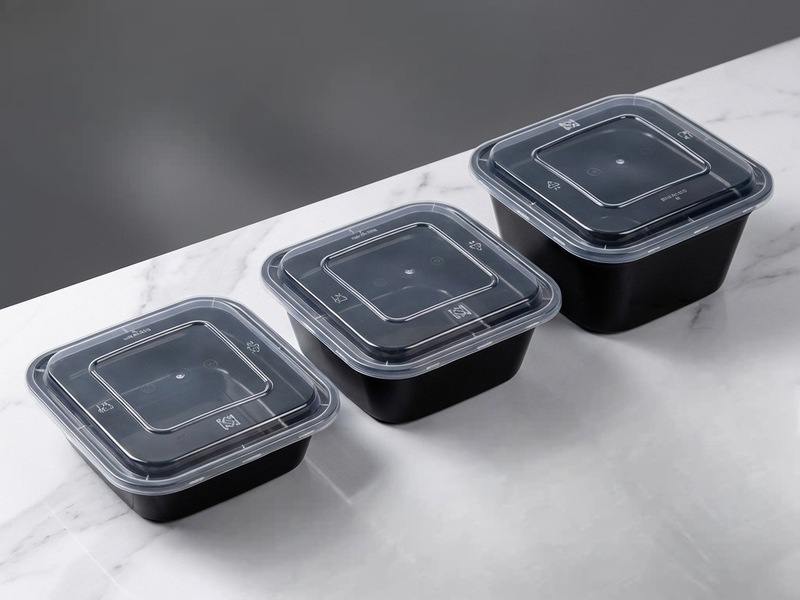
“I always favored the clear lidded black polypropylene containers. They maintain their warmth quite well.”
— Delivery Operator
Match the material to the use case
- Restaurants and ghost kitchens (hot delivery) — black PP or MFPP with a perimeter-lock, vented lid keeps food hot and intact through the 30–60 minute window.
- Hospital and school canteens — microwave-safe MFPP meal boxes reheat on the line without transfer.
- Retail grab-and-go — clear PET shows the salad or dessert and keeps cold-chain clarity.
- Sauces, dressings and dips — our 1–4 oz (25–100 ml) sauce cups come with separate or hinged lids.
- Meal prep and food trucks — PP is freezer safe, dishwasher safe, and microwavable, and the same to-go containers stack, seal, and reuse one lid across sizes.
The point of matching material to use is simple: your customer never sees the spec, only the result.
Get samples to run your own leak test →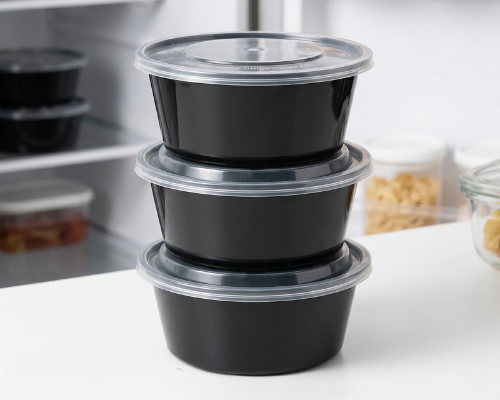
Quality Assurance
The leak test we expect our containers to pass
Do a field test (same field test they do on arrival). Half fill each container with water, attach the lid snap on tight, then invert, leave upside-down 60sec, and vigorously shake your “package” like any takeout is shaken up in a restaurant delivery car/bike-messenger bag; our hot-food containers and lid are expertly machined to pass this test. Not sitting flat on your desk top, but just like it appears in The “ field.” Give a pair of samples a workout before ordering one entire case.
One honest caveat, because buyers are right to weigh cost against features: microwave-safe is valued but not universal, and many operators note only about 10% of customers reheat in the original container. So we don’t push you to pay for a premium reheat material across 100% of your volume if your menu doesn’t need it. Heat retention and leak integrity matter on every order; in-container reheat matters on some, and we help you split the catalog accordingly.
Food Safety & Certifications: Food-Grade, Tested & Compliance-Ready
Every container is made from food-grade raw materials that meet national hygiene standards and international food-safety certification. Our polypropylene and PET lines fall under the same federal rule a domestic buyer relies on: FDA 21 CFR 177.1520, “Olefin polymers”, which authorizes these resins for direct food contact within defined extractive limits. We hold the certifications that prove it rather than asking you to take it on faith.
Compliance Briefing
Compliance question 1: the foam bans
At least 12 US states now prohibit expanded polystyrene foam foodservice ware, and California’s took effect January 1, 2025 under SB 54, with civil penalties up to $50,000 per day, alongside Washington, Oregon, New York, Maine, and others. Every one of those bans targets EPS foam specifically. Rigid PP, MFPP, PET, and bagasse remain fully legal, so our six-material range is the compliance answer to the foam bans, not a liability exposed by them.
Compliance question 2: “compostable” is not the same as PFAS-free
Plant-based molded-fiber and bagasse products have historically carried some of the highest PFAS “forever chemical” levels of any food packaging, because fiber has no natural grease barrier and was coated to get one. The proof point is not the eco label, it is certification. Our compostable lines are built to ASTM D6400 / D6868 and BPI’s under-100-ppm total-fluorine limit, and for EU buyers EN 13432, and we supply the documentation, not just the claim.
Food Safety Mgmt
System certification
Quality Mgmt
System certification
Production License
National manufacturing
2 Patents
Packaging box + lid
Food-Grade
FDA 21 CFR 177.1520
BPA-Free
Inherent to food-grade PP
Closing the overseas trust gap
The FDA system requires self-certification — manufacturer must prove compliance — and doesn’t approve overseas factories — so, a commoditized product provider shipping no Declaration of Compliance puts the due-diligence burden entirely on you. We fill that gap exactly the way buyers asked us to: a verifiable physical factory in Lanshan District, Linyi, Shandong, migration test reports from an independent lab, and a Declaration of Compliance with every order.
Working With Wanhui: MOQ, Custom Branding, Lead Time & Global Shipping
Foodservice buyers tell each other the quiet part out loud: “order direct from Asia… you’d save anywhere from 30–50%.” The savings are real, distributors carry a 15–30% markup and a name like Uline runs an estimated 45–50% markup, so direct-factory sourcing removes a layer of cost. But the headline factory price isn’t the number that decides it: total landed cost is, so spec your decision on the full stack, not the sticker.
Landed cost, not list price
Compare direct-factory total cost = unit price + tooling (amortized) + ocean freight + duty (MFN base + Section 301 overlay) + MPF 0.3464% + HMF 0.125% — against a distributor’s 15–50% markup. At volume, direct wins; below break-even, it may not. We give you the line items to run it.
Source: USITC HTS 3924.10.40 (3.4% MFN), USTR Section 301 actions, US CBP fee schedule (industry data).
View Cost Inputs
Here are the inputs we offer as clear, unbiased numbers for where YOUR landed cost moves:
- Family of materials – injection PP is your baseline; the bagasse, and in-mold-labeling add cost.
- Volume in your tier of MOQs – as freight/handling costs per unit drop significantly with volume. (We’ve seen per-unit costs for processing drop from ~ $.25/ea at 1,000 pcs down to ~$0.10/pc at 2,500 pcs, for a standard item). Standard or stocking items carry low minimums, Custom imprinting/molding will require larger ones.
- Customization – logo printing and in-mold labeling add a one-time setup, while custom mold development adds tooling with a 4–6 week tooling lead before a roughly 40–45 day production run.
- Destination – ocean freight and the duty/fee stack (USITC HTS 3924.10.40 plus the Section 301 overlay), which we quote line by line so nothing hides in a bundled “delivered price.”
The hidden costs we refuse to bury in a “delivered price”
There’s a hidden Section 301 tariff layer of up to 25% in a bundled “delivered price”; a “wholesale” price from a distributor can conceal shipping of greater value than the merchandise – plus a 20-30% restocking charge that makes a $112 order into a $68 credit. We won’t claim a single landed cost on a web page; the honest way to buy is on line-item-value in a quote; we provide that detail below for each layer.
For operators pooling orders into bulk food containers to overcome MOQ – a foodservice buying tactic widely promoted in community forums – we consolidate shipments so your MOQ can qualify for the direct factory price without stuffing your pantry with product.
Get a landed-cost estimate →
RESOURCES / UTILITIES
Interactive Engineering & Procurement Tools
Select container materials, estimate landed costs, and find capacity specifications using our interactive tools.
Facility Overview
Factory & Manufacturing Operations
Yes – provided they’re made with food-grade resins. Our PP and PET product lines meet FDA 21 CFR 177.1520 for direct contact; food-grade polypropylene is also inherently BPA-free due to its chemical structure, polymerized from propylene gas to form a stable material containing no bisphenol-A.
PP and Mineral-Filled PP (MFPP) both tolerate reheating in standard microwave ovens and hold structural form up to around 120°C. Unfilled clear PET will soften and lose its form at approximately 70°C. If your reheat-in-container business model is important, please refer to our PP and MFPP product family pages – we indicate microwave-safe SKUs clearly.
For applications involving hot delivery, we recommend MFPP or our heavy-duty Black PP with vented perimeter-locking lids. Both the container and the lid are injection molded from a single toolset, ensuring the components seal under the pressure of transport. Our PP can withstand far more abuse than PET and generally outperforms container-lid mismatch failures that buyers commonly encounter.
Yes. PP remains sufficiently pliable at temperatures down to -20°C for reliable freezer storage and durability during delivery, deflecting impacts without cracking; it bounces back. At the lower end of temperatures, however, PET can become quite brittle, so we advise opting for PP or bagasse for meal prep applications intended for freezer storage.
As factory-direct suppliers, we accommodate case and pallet volume at transparent, escalating MOQ levels, with stock formats at low MOQ and custom printed designs (which require dedicated molds) at higher MOQ. With no intervening distributor channel, we pass volume discounts directly to our customers and eliminate a common 15-50% mark up. Request a quote on your next custom project for itemized savings details.
Yes. Our core competencies include prominent branding with either in-mold labels (IML – permanent, scratch-resistant prints embedded into the material as it forms) or brand-printed designs, as well as custom-engineered exclusive molds for truly unique container shapes. New custom mold orders will involve initial tooling costs and production setup time.
Yes, the 12 US state bans (including the recently implemented California SB 54) focus specifically on foam, prohibiting expanded polystyrene (EPS) and similar materials. Rigid-wall materials such as MFPP, PP, PET and bagasse aren’t a form of foam and are therefore not included in any of these bans. That’s why so many of our clients in these states transition to these compliant alternative materials.
Not necessarily: many past compostable solutions (typically derived from fiber paper products) used chemicals such as PFAS as a water and grease barrier. All of our compostable product offerings comply with the BPI standard as well as ASTM D6400 and D6868 requirements for under 100 ppm total fluorine content. We provide test certifications with orders so your consumers know what to expect beyond the label alone.
Our facility at Lanshan District, Linyi, Shandong houses 20 thermoforming, 6 extrusion and 60 injection machines-a physical plant that can be audited on-site, as many of our partners do. We provide a Declaration of Compliance and migration testing reports to all clients with every shipment, confirming adherence to applicable standards.
It depends on volume: direct eliminates the 15-50% distributor markup, but you add ocean freight and a layer of the import duty/fee stack. If your volume exceeds a certain (and unadvertised) tipping point, direct has a lower landed cost. Otherwise a distributor may be simpler, and either way we share all the line items needed to run the calculation.